
 English
 Español
 русский
 Français
Die casting automotive parts are made by forcing molten metal into a steel mold under high pressure, where it fills t...
READ MORE
Content
A purchasing team once sent us two quotes for the same bracket. One quote used an aluminum alloy; the other used a zinc alloy. The zinc part was smaller, thinner, and ready for plating without much finishing. The aluminum part was lighter and better suited to a hot, vibrating under-hood environment. The unit prices were close enough to look confusing until we mapped both options against wall thickness, service temperature, plating requirements, and annual volume. The lower piece price would not have been the lower total cost.
That is the practical reality of die casting metals. The alloy is not a line item to settle after the drawing is fixed. It decides how thin the walls can be, how much draft the part needs, how the tool is built, how fast the shot cycle runs, what porosity risk looks like, how much machining is needed, and whether the finished component survives its service environment. Our conclusion up front: choose the die casting metal by failure mode and production volume first, then optimize price. Aluminum, zinc, magnesium, and copper alloys each solve different problems, and the wrong choice usually shows up later as scrap, leakage, corrosion, or an expensive secondary operation.
Die casting metals are non-ferrous alloys that can be melted and forced into a steel die at high pressure. The common families are aluminum, zinc, magnesium, copper-based alloys such as brass and bronze, and low-melting lead or tin alloys. Ferrous metals are generally outside the high-pressure die casting process because their melting temperatures shorten die life and change the metallurgy of the tool steel. That is why a die casting conversation usually begins with a non-ferrous alloy family.
The alloy family sets the process route. Zinc, magnesium, and many lead or tin alloys can run in a hot-chamber machine, where the injection mechanism sits in the molten metal. Aluminum and copper alloys usually run in a cold-chamber machine, where a measured ladle of metal is poured into a shot sleeve before the plunger pushes it into the die. The distinction is not academic. It affects cycle time, metal handling, oxidation, tool design, and the type of defects a supplier must control.
For buyers, the first useful question is not “What is the cheapest die casting metal?” It is “What is the part expected to do, and which metal family keeps the failure risk acceptable at the required volume?” A thin, decorative enclosure has different needs from a leak-tight battery tray or a structural body node. A metal that is excellent for one may be a poor commercial choice for the other.
Each family has a recognizable sweet spot. Aluminum dominates large housings and structural parts. Zinc owns small, precise, platable components. Magnesium is chosen when mass matters more than corrosion simplicity. Copper alloys serve thermal and electrical duties where conductivity is central. Lead and tin alloys remain in niche bearing, sealing, and weighting applications, though environmental rules have narrowed their use.
| Metal family | Typical alloys | Common process | Best-fit advantages | Main limits to check | Typical parts |
|---|---|---|---|---|---|
| Aluminum | A380, ADC12, A360, A413, AlSi10Mg-type alloys | Cold chamber | Good strength-to-weight ratio, castability, thermal conductivity, large-part capability | Porosity control, machining allowance, die soldering risk, limited full heat treatment in conventional high-pressure castings | Controller housings, gear chambers, battery trays, motor housings, structural nodes |
| Zinc | Zamak 3, Zamak 5, ZA-8-type alloys | Hot chamber | Thin walls, high dimensional precision, easy plating, long die life, low melting temperature | Higher density, creep at elevated temperature, lower strength-to-weight ratio than aluminum or magnesium | Hardware, small gears, electronic enclosures, decorative fittings, lock components |
| Magnesium | AZ91D, AM60B, AM50A-type alloys | Hot chamber | Lowest density among common die casting metals, good damping, good machinability | Corrosion protection, protective gas handling, flammability controls, limited high-temperature strength | Instrument panel structures, portable device housings, steering components, lightweight brackets |
| Copper alloys | Brass and bronze families | Cold chamber | High electrical and thermal conductivity, wear resistance, good bearing behavior | High melting temperature, shorter die life, higher energy use, more demanding process control | Connectors, heat sinks, bushings, pump components, electrical contacts |
| Lead and tin alloys | Low-melting bearing and sealing alloys | Hot chamber | Low melting point, good bearing and sealing behavior, dimensional stability | Low strength, environmental and health restrictions, limited structural use | Bearings, seals, weights, specialized electrical parts |
The table is a starting map, not a final answer. Within each family, alloy choice changes fluidity, hot cracking risk, corrosion behavior, machinability, and response to surface treatment. Two aluminum alloys can look similar on a drawing and behave very differently in a leak test or a salt-spray chamber.
Aluminum is usually the first family we evaluate for automotive, communications, power electronics, and industrial equipment parts. It offers a useful balance of strength, weight, corrosion behavior, thermal conductivity, and castability. It also suits large dies and moderate-to-high volume production. The alloy designation matters because the silicon, copper, and magnesium content shifts the balance between castability, strength, corrosion resistance, and pressure tightness.
Al-Si-Cu alloys such as A380 and ADC12 are widely used because they cast well, machine reasonably, and tolerate complex geometry. They are a practical default for housings, brackets, and general industrial parts where ultimate corrosion resistance is not the dominant requirement. Al-Si-Mg alloys such as A360 improve corrosion resistance and are often considered for parts exposed to moisture or mild chemical environments. Al-Si alloys with lower copper, such as A413-type grades, can offer better pressure tightness and are used where leakage must be controlled. Structural and high-integrity applications may use AlSi10Mg-type alloys with tighter process control, vacuum assistance, or specialized heat treatment.
The alloy choice should be tied to the acceptance test. If the part is a cosmetic cover, surface finish and dimensional repeatability may lead. If it is a controller housing, thermal management and sealing faces may lead. If it is a battery tray or a longitudinal beam, stiffness, crash behavior, fatigue, and joining method may lead. A single “good aluminum” specification is too blunt for those different duties.
Aluminum wins on mass reduction, thermal conductivity, and the ability to cast large, integrated shapes that replace several stamped and welded parts. It bites when the design assumes steel-like stiffness, when wall sections change abruptly, or when the buyer expects a fully heat-treated T6 property from a conventional high-pressure casting without discussing porosity and blistering risk. Aluminum also has a strong affinity for die steel, so soldering, sticking, and die wear need attention through temperature control, die coating, lubrication, and die maintenance.
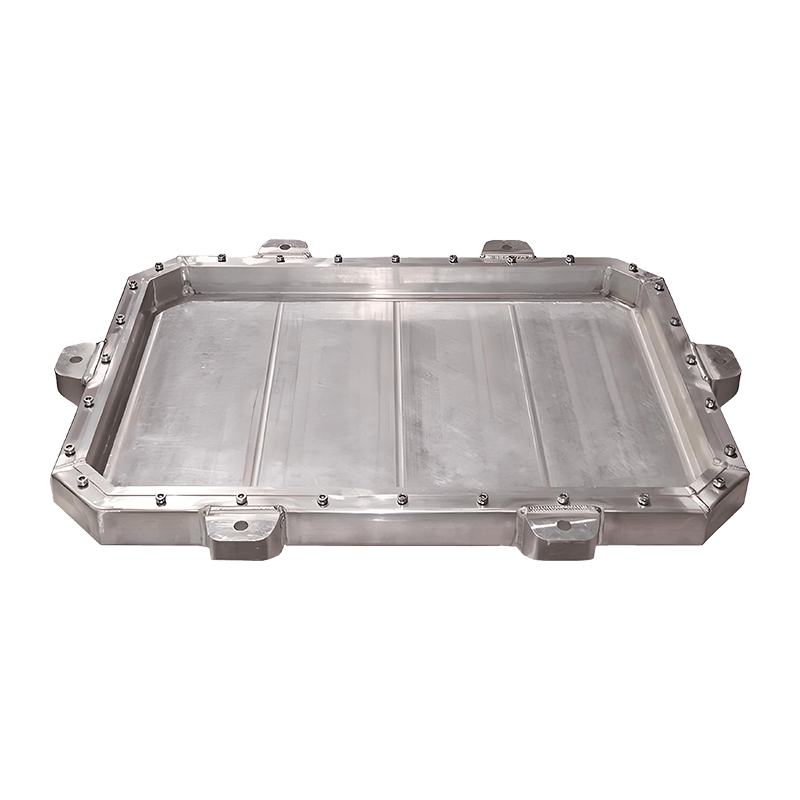
For electric vehicle and energy-storage programs, aluminum die casting metals are often used for battery trays, motor housings, reducer housings, controller housings, and structural nodes. A battery tray is a useful example because it combines sealing, stiffness, corrosion protection, and joining requirements. The metal must support the process window, but the design must also give the die a chance to fill cleanly and avoid trapped gas in critical sealing zones.
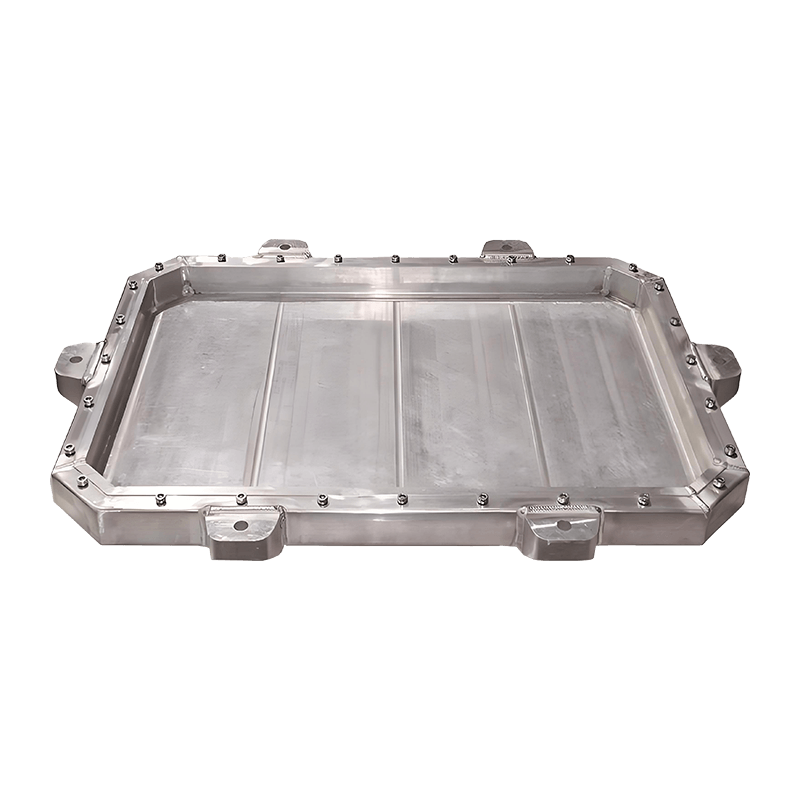 Die Casting Battery Tray for New Energy VehiclesOEM/ODM battery tray for new energy vehicle battery systems, positioned as a core load-bearing and protective structural component in lightweight aluminum die-casting development.View Product →
Structural parts raise the bar again. A longitudinal beam or a shock tower is not just a shape; it is a load path. The alloy, filling pattern, solidification sequence, and any post-casting operations need to be developed together. If the structural part is treated as a generic aluminum housing, the result may pass dimensional inspection and still fail fatigue or crash validation.
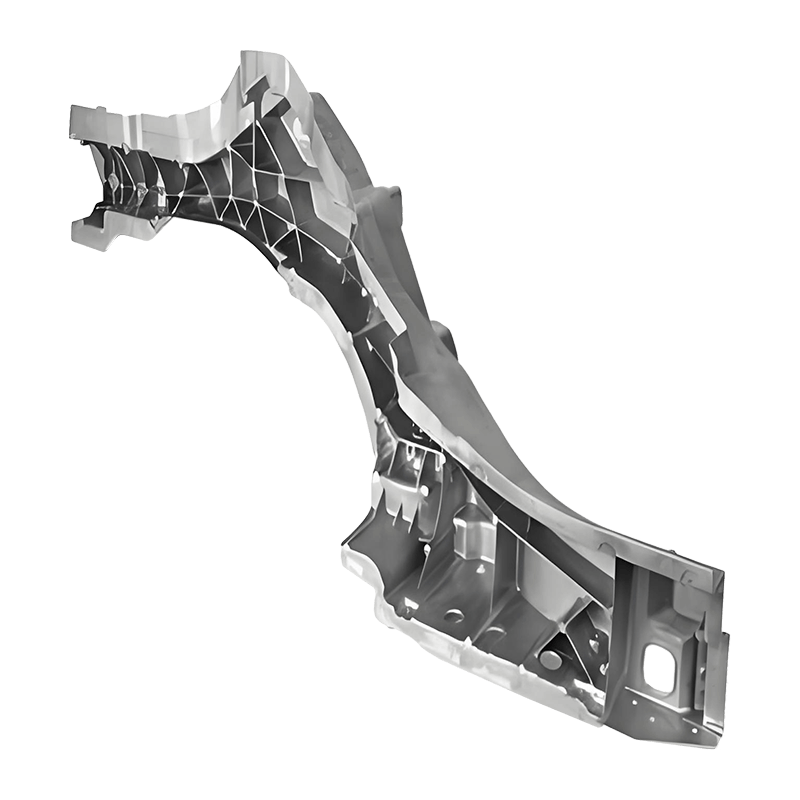 Die Casting Automotive Longitudinal BeamsOEM/ODM die-cast longitudinal beam for vehicle body skeletons, a key structural component where body support and collision-energy absorption drive development.View Product →
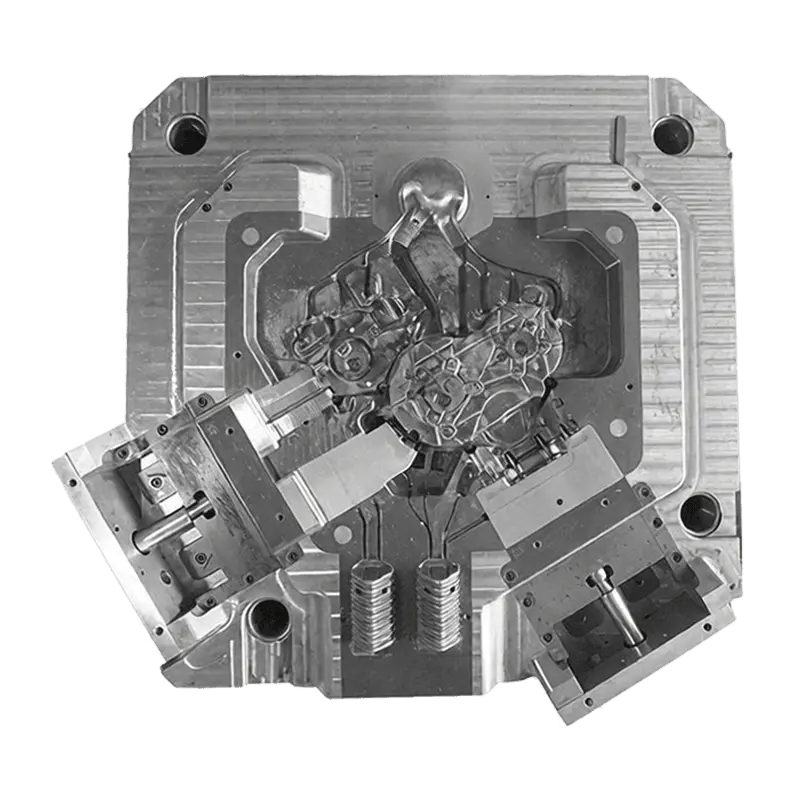
In our own mold and casting work, aluminum projects usually benefit from mold-flow simulation before steel is cut. Filling, air entrapment, solidification, and thermal balance can be reviewed while the design is still flexible. That is cheaper than discovering a shrinkage problem after the die is hardened.
Zinc alloys are the precision specialists. Zamak 3 is a common general-purpose grade with good dimensional stability and plating response. Zamak 5 adds strength and hardness, often at some cost in dimensional stability and ductility. ZA-8-type alloys offer higher strength and creep resistance than the standard Zamak grades and can be useful when the part needs more mechanical margin. Because zinc melts at a much lower temperature than aluminum, hot-chamber die casting can run with shorter cycles and long die life.
The commercial advantage is not just cycle time. Zinc can fill thin walls, reproduce fine detail, and hold tight dimensions across a large production run. It also takes electroplating, powder coating, and painting well when the casting surface is properly controlled. That makes zinc attractive for visible hardware, decorative trim, lock parts, small gears, electronic enclosures, and components with fine text or snap features.
Zinc has limits. It is denser than aluminum and magnesium, so a zinc part is usually heavier for the same envelope. It can creep under sustained load at elevated temperature, which matters for brackets or load-bearing parts near hot equipment. Zinc is also less forgiving than aluminum in some high-temperature service conditions. If a zinc part is being considered for an under-hood application, the service temperature and load duration need to be stated clearly, not left to a generic “automotive grade” assumption.
Purchasing checks for zinc should include alloy grade, plating specification, dimensional capability on thin features, and creep margin where relevant. A zinc quote can look attractive because the casting cycle is fast and the tool life is long, but the total cost can move if the plating process needs extra buffing or if the part needs a more expensive alloy to meet a strength target. Zinc is a strong choice when precision and finish are the main value drivers; it is a weaker choice when mass reduction is the main driver.
Magnesium is the lightest common die casting metal, with a density around two-thirds that of aluminum. That advantage matters in portable devices, instrument panel structures, steering components, and weight-sensitive brackets. Magnesium also machines well and has useful damping behavior, which can help with noise and vibration. AM60B and AM50A-type alloys are used where ductility and impact behavior matter, while AZ91D is common where strength and castability are prioritized.
The catch is handling and corrosion. Magnesium requires protective gas or another controlled atmosphere in the melt, and the foundry must have procedures for chip handling, fire safety, and surface protection. Magnesium parts usually need a coating system for corrosion resistance, especially in humid, salty, or automotive underbody environments. The coating is not a cosmetic afterthought; it is part of the metal selection. If the coating process is not qualified, the lightweight gain can be lost to corrosion returns.
Magnesium also has lower high-temperature strength than aluminum in many common grades, so it is not automatically a drop-in replacement. A magnesium housing may need thicker ribs or different fastening details to meet the same stiffness target. The right approach is to evaluate the full assembly, including inserts, bolts, galvanic contact with other metals, and coating coverage. Magnesium is a good choice when mass reduction is valuable enough to justify a controlled corrosion-protection system and a foundry with the right handling discipline.
Copper alloys, including brass and bronze families, are chosen for conductivity, wear resistance, and bearing behavior. They are not the everyday choice for large structural housings because the melting temperature is high, die life is shorter, and the process window is narrower. But for electrical connectors, heat sinks, bushings, pump parts, and contacts, copper alloys can solve problems that aluminum cannot. The design team should confirm the required conductivity, the allowable machining stock, and the expected die maintenance cycle. A copper alloy quote must be judged against the total cost of the thermal or electrical performance it delivers, not against an aluminum quote for a part with different duty.
Lead and tin alloys sit in a smaller niche. Their low melting points and bearing behavior suit certain bearings, seals, weights, and specialized electrical parts. Environmental and health regulations have reduced their use, and many buyers now ask for lead-free alternatives where possible. If a lead or tin alloy is still specified, the purchase order should state the applicable restrictions and the recycling route. These alloys are rarely the right answer for a new structural part, but they can be efficient for a specialized low-temperature function.
Specialty alloys and metal-matrix approaches exist, but they should not be treated as a shortcut around a poor design. If a standard aluminum or zinc alloy fails because of wall thickness, corner radii, or an unrealistic tolerance, a more exotic metal may only raise the cost of the same problem. Fix the geometry and process first, then consider the alloy upgrade.
The most reliable selection process starts with the service environment and the failure mode, then moves to manufacturing. A useful sequence is below.
For example, a communications filter housing may need thermal conductivity, dimensional stability, and a cost-effective die. An aluminum alloy is often the natural starting point because it combines thermal performance with a mature process route. If the same housing were evaluated in zinc, the thin-wall precision might improve, but the mass and thermal requirements could move the wrong way. If it were evaluated in magnesium, the weight would drop, but corrosion protection and coating cost would need to be included. The answer depends on which requirement is non-negotiable.
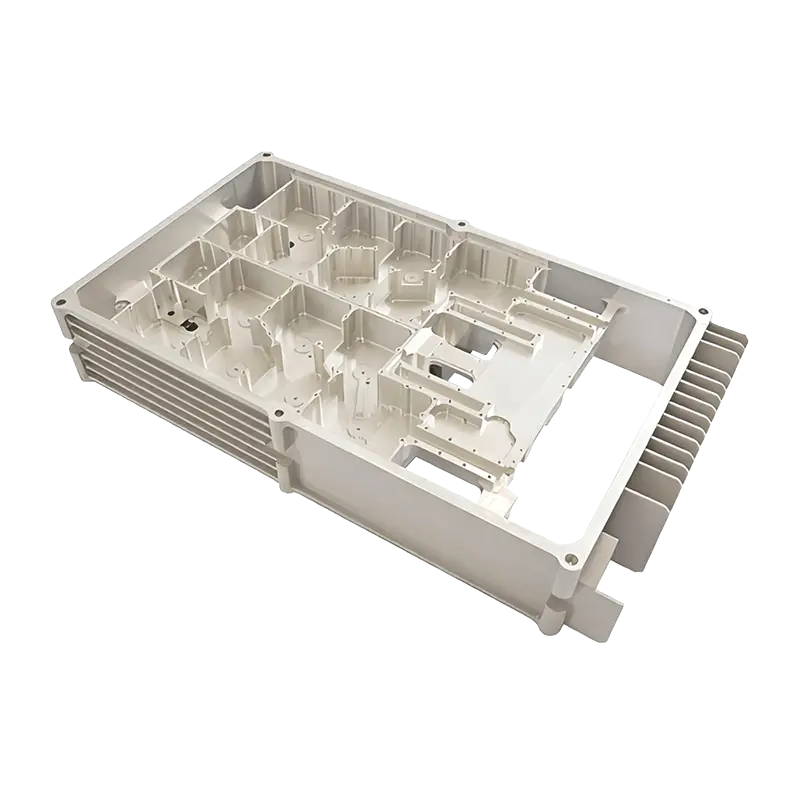 Die Casting Telecommunication Filter HousingOEM/ODM 5G filter housing for telecommunication equipment, presented as a key signal-filtering component for base stations and mobile reception.View Product →
A second example is an electronic enclosure with a cosmetic surface. Zinc may be attractive because it plates well and holds fine detail. Aluminum may be attractive because it is lighter and can be anodized or painted. The choice should be made with the surface specification, drop test, thermal load, and annual volume in view. A procurement team that compares only the casting price will miss the finishing and mass consequences.
Before a quote is released, the buyer and supplier should agree on the alloy grade and standard, the process route, the heat-treatment condition if any, the expected draft and wall thickness, the machining allowance, the porosity acceptance criteria, and the finishing specification. These points are not paperwork. They are the difference between a quote that can be compared and a quote that will be renegotiated after the first samples.
Die casting metals do not behave the same way in the die. Aluminum and copper alloys run in cold-chamber machines, where the metal is exposed to air before injection and oxidation control matters. Zinc and magnesium run in hot-chamber machines, where the injection system is submerged in the melt and process stability depends on careful temperature and gooseneck maintenance. The die thermal balance, shot profile, vacuum level, and lubricant strategy must be matched to the alloy, not copied from another family.
Porosity is the most common technical conversation. Gas porosity comes from air or gas trapped during filling. Shrinkage porosity comes from volume loss as the metal solidifies. The two are controlled differently. Vacuum assistance can reduce gas entrapment in critical sections. Overflow placement, runner design, die temperature, and intensification pressure can reduce shrinkage. In some cases, local squeeze pins or a change in wall thickness do more than a metal change.
High-vacuum die casting is one route for shell-type parts where leakage and internal quality are important. It can improve fill conditions and reduce trapped gas, but it does not replace proper die design or a validated process window. The alloy must still be suitable for the wall thickness and the acceptance test. A vacuum system on a poorly fed die will not turn a bad design into a pressure-tight part.
For deeper process detail, our article on high-vacuum die casting for shell products explains how vacuum assistance is applied in production. The key purchasing point is that porosity acceptance should be written as a test method and a limit, not as a vague requirement for “no porosity.” A 2D X-ray, CT scan, leak test, or sectioned sample tells the supplier what to control and tells the buyer what to accept.
Metal price is visible, but it is not the whole cost. Die casting economics depend on shot weight, yield, cycle time, die life, scrap rate, machining stock, finishing, and inspection. A zinc part can have a fast cycle and a long die life, but its higher density may make the finished part heavier and the raw material cost less favorable than a thin aluminum part. An aluminum part may save mass, but it may need more machining, leak testing, or a more expensive vacuum process. A copper alloy may deliver conductivity that no aluminum part can match, but the die maintenance interval will be shorter.
Buyers should require a cost breakdown that separates metal, casting, machining, finishing, tooling amortization, and testing. This makes it possible to see what changes when the alloy changes. It also exposes the hidden costs of an apparently cheap quote. If one supplier quotes a lower casting price but assumes a longer machining cycle or a higher scrap allowance, the total cost may not be lower. If another supplier quotes a higher tooling cost but proposes a more robust die with better cooling, the per-part cost at volume may be better.
Tooling should be discussed with the metal choice in the same meeting. Aluminum die casting tools need thermal balance for higher temperatures and may need die coatings or inserts in high-wear areas. Zinc tools can run with different cooling and clearances because the metal is less aggressive. Magnesium tools need handling and safety provisions. Copper tools face higher thermal load. A die designed for one family is not automatically suitable for another.
Volume changes the decision. At low volume, a simple die and more machining may be more sensible than a highly optimized thin-wall casting. At high volume, the cost of a better die and a tighter process can be paid back through yield, cycle time, and reduced finishing. Our recommendation is to quote the part at three volumes, such as prototype or low volume, expected annual volume, and a stretch volume. That shows whether the metal choice remains economic when the program scales.
A metal choice is only as good as the specification that verifies it. The purchase order should state the alloy grade and reference standard, the process route, the heat-treatment condition if applicable, and the acceptance criteria for chemical composition and mechanical properties. For safety or structural parts, the buyer should ask for a dimensional report, material certificates, and a control plan. For sealed parts, the leak test method, pressure, duration, and allowable leak rate should be explicit.
Porosity and internal soundness should be tied to the part function. A cosmetic cover may accept internal porosity that a pressure-tight housing cannot. A structural node may need CT or sectioning at agreed locations. A plated zinc part may need adhesion testing and surface inspection. A magnesium part may need coating thickness and corrosion testing. The acceptance criteria should match the failure mode, not simply copy a general standard.
Our quality system is built around ISO 9001 and IATF 16949 requirements, which is useful for automotive and industrial buyers who need documented process control. That does not remove the need for project-specific agreement. The buyer should still confirm PPAP or equivalent submission requirements, control plan, traceability, and change notification. A supplier that can cast a good sample but cannot control the process across a production run is not a safe source.
If you are comparing die casting metals for a new part, the most efficient next step is to share the drawing and service conditions with our team. Include the annual volume, the failure mode, the finishing requirement, and the tolerance that actually matters. That gives the tooling and casting team enough information to recommend a metal family and a process route rather than a generic quote.
Aluminum, zinc, magnesium, and copper are all recyclable, and die casting production generates controlled scrap that can be returned to the metal supply chain. The environmental case is strongest when the part is designed for efficient material use, when scrap is separated by alloy, and when the finishing route does not create a difficult waste stream. Lightweighting can reduce fuel or energy use in service, but the benefit should be evaluated over the full life cycle, not just the mass of the casting.
Supply risk also matters. Metal prices move with energy costs, trade flows, and regional demand. A zinc-intensive design may be exposed to different price pressure than an aluminum-intensive design. A magnesium part may depend on a smaller supplier base and more specialized handling. A copper alloy may have a longer lead time for certain grades. For programs with long production lives, the buyer should ask how the supplier manages alloy certification, scrap segregation, and second-source material approval.
Geographic logistics can influence the choice as well. A supplier close to a port can support export programs, but the metal still needs to be sourced and certified. A part that is easy to cast but difficult to ship or finish may not be the best total solution. The practical rule is to keep the metal family, the die, the finishing route, and the logistics plan aligned from the beginning.
For most new die casting projects, the decision follows a short path. Start with aluminum if the part is a large housing, a thermal component, a structural body part, or a general industrial casting that needs a balance of strength, weight, and cost. Start with zinc if the part is small, precise, platable, and produced in high volume with thin walls. Start with magnesium if mass reduction is important enough to justify protective coating and specialized handling. Start with copper if conductivity or wear resistance is the dominant requirement. Treat lead and tin alloys as niche choices with regulatory and recycling checks.
Then test the choice against the real production constraints: wall thickness, draft, tolerance, porosity acceptance, finishing, tool life, and annual volume. If the alloy survives those checks, compare total cost at the expected volume and at a lower and higher volume. Do not compare a zinc quote with an aluminum quote unless both have the same finishing, testing, and tooling assumptions. Do not compare a copper alloy with aluminum unless the conductivity requirement is part of the comparison.
The best die casting metal is the one that meets the service requirement with the least process risk and the most predictable total cost. That is a more useful standard than the lowest price per kilogram, and it is the standard we use when reviewing a new drawing. If the metal family, die design, and quality plan are developed together, the part has a much better chance of moving from sample approval to stable production without surprises.
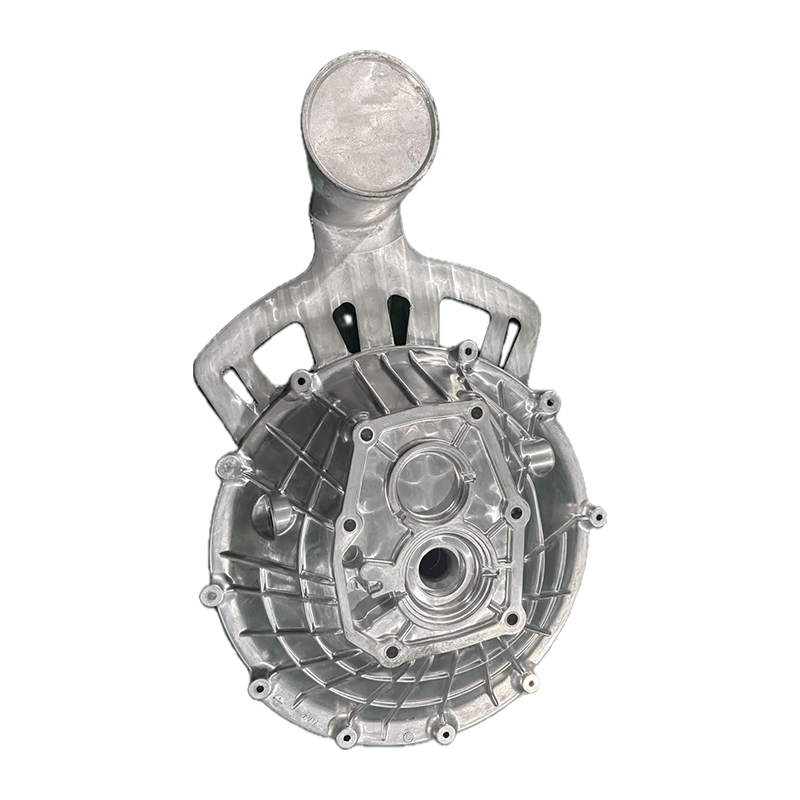

Die casting automotive parts are made by forcing molten metal into a steel mold under high pressure, where it fills t...
READ MORETwo quotations for the same aluminum controller housing can differ by 20% or more, even when both suppliers list the sa...
READ MOREA 12-week die casting mold build can look competitive on quote and still become the expensive option if the first trial...
READ MOREA 180 g aluminum housing with 1.8 mm walls and a ±0.10 mm bearing bore is quoted in the same week as a 12 g stainless s...
READ MORE

Sun Yuejun: +86-13806631860
Wang Shiyong: +86-15958891460 / 15058297768
Dove Yao: +86-18625086675


Copyright © Ningbo Dinghong Mould Co., Ltd. Rights Reserved. Custom Precision Die Casting Aluminum Alloy Parts Manufacturers
