
 English
 Español
 русский
 Français
Die casting automotive parts are made by forcing molten metal into a steel mold under high pressure, where it fills the cavity and solidifies in seconds. The process makes engine, transmission, chassis, and body components with accurate dimensions, thin walls, and smooth surfaces at a cost per part that suits high volume vehicle production. Aluminum is the most common alloy, but magnesium, zinc, and copper alloys each serve specific roles in the vehicle.
Short Answer: What Die Casting Automotive Parts Are
Die casting automotive parts are metal components produced by injecting molten alloy into a precision mold. The mold is reused for thousands or hundreds of thousands of cycles, which is why the process fits automotive volumes. The finished part leaves the mold near its final shape, so machining and assembly work are reduced.
- Engine components such as blocks, cylinder heads, and crankcases are produced where dimensional accuracy matters most.
- Body and chassis components such as wheels, control arms, and brake calipers use die casting to combine strength with light weight.
- Transmission and clutch housings, oil pans, and hybrid drive housings are common high volume die cast parts.
- Aluminum alloys are the default choice, with magnesium and zinc used for specific weight and detail requirements.
Common Types of Automotive Die Casting Parts
Automotive die casting covers a wide range of components. Each group has its own design, wall thickness, and leak or load requirements, so the process and alloy are chosen to match the function of the part.
Engine components
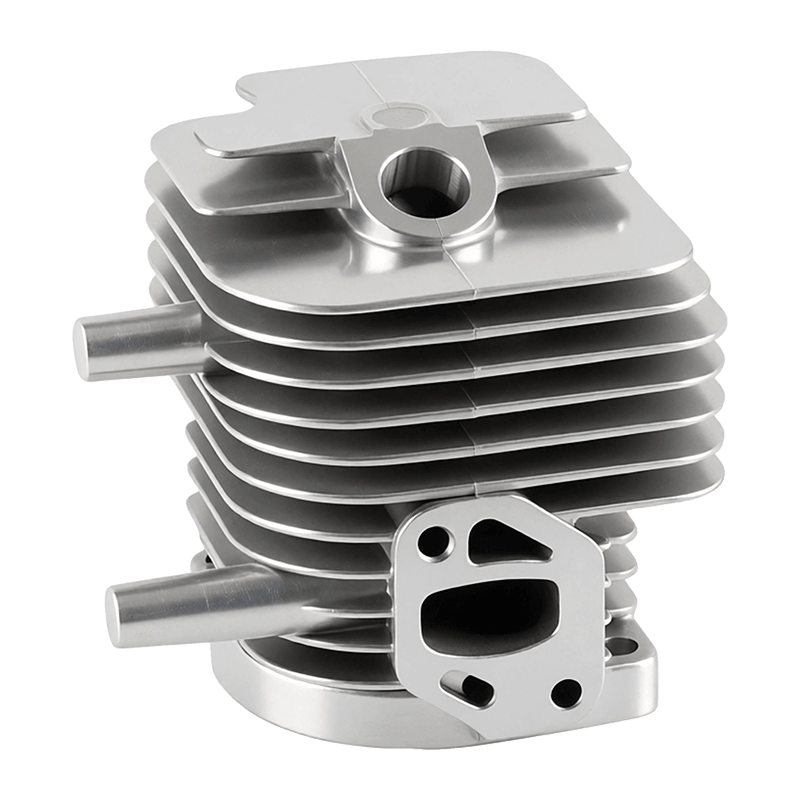
Engine blocks, cylinder heads, and crankcases are among the largest and most demanding die cast parts. The castings must hold dimensional accuracy, resist heat, and seal against oil and coolant under pressure. Aluminum alloys are standard for these parts because they combine low density with good thermal conductivity.
Transmission and clutch housings
Transmission and clutch housings enclose gears, shafts, and bearings. They need stiffness to keep the gear set aligned, sealing faces that resist oil leakage, and bearing seats that hold tight tolerances. Integral stiffening ribs are cast in place, which reduces the number of welded or bolted parts.
Body and chassis components
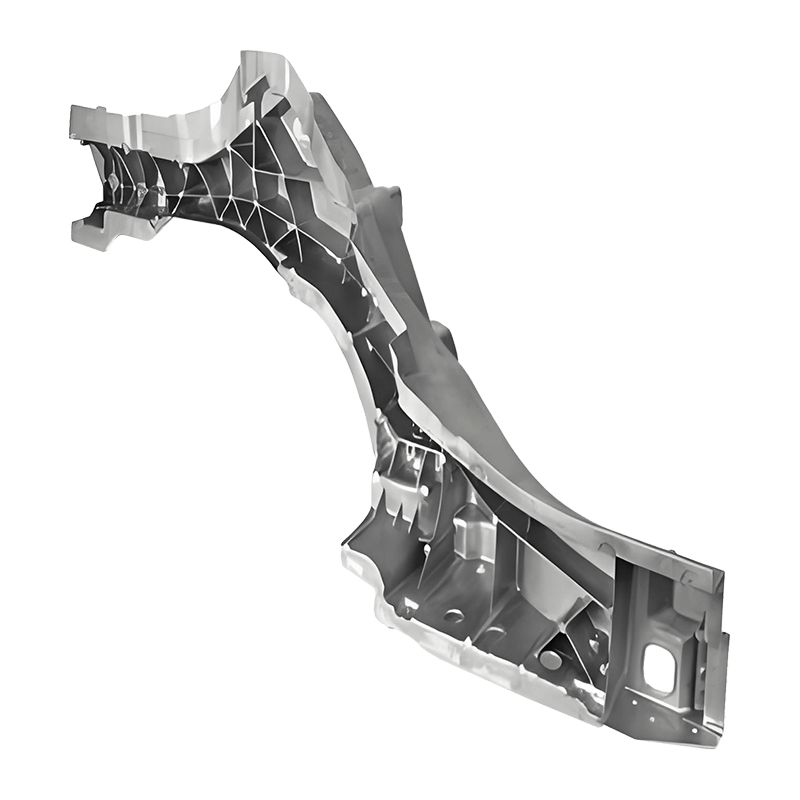
Wheels, doors, frames, control arms, axles, and brake calipers are produced where strength and weight both matter. Die casting can reduce the weight of these parts compared with steel stampings while keeping the load path intact, which supports both fuel economy and handling.
Interior components
Steering wheel frames, instrument panel supports, and center console structures are die cast where appearance, feel, and dimensional stability are needed. Zinc alloys are often chosen for small interior parts because they flow well into fine detail and provide a dense surface for plating or painting.
Oil pans and fluid containment
Oil pans need controlled wall thickness, flat flanges for gasket sealing, and accurate drain port machining. Die casting produces the shape in one operation, and the flange flatness is then checked and machined where needed to meet the sealing requirement.
Die Casting Processes: Hot Chamber and Cold Chamber
There are two main die casting processes, and the choice between them depends on the melting point of the alloy. The process determines cycle time, part size, and the equipment that must be installed.
Hot chamber die casting
In hot chamber die casting, the injection mechanism sits partly inside the molten metal. This arrangement suits low melting point alloys such as zinc, magnesium, and lead. The cycle is short, the operation is simple, and the energy efficiency is high. Hot chamber machines are therefore common for small and medium parts made from zinc.
Cold chamber die casting
Cold chamber die casting is used for high melting point metals such as aluminum and copper alloys. The metal is ladled into a separate shot chamber for each cycle, which protects the injection parts from the high temperature of aluminum. Injection pressure is higher than in hot chamber machines, often two to three times higher, and this allows larger parts with thin walls, such as engine blocks with walls as thin as 2 mm in suitable designs. The cycle is longer, and transfer from the furnace to the shot chamber can introduce impurities, so skilled operation is required.
| Factor | Hot chamber die casting | Cold chamber die casting |
|---|---|---|
| Typical alloys | Zinc, magnesium, lead | Aluminum, copper alloys |
| Cycle time | Short | Longer |
| Injection pressure | Lower | Higher, often two to three times greater |
| Typical part size | Small and medium | Medium to large |
| Typical automotive parts | Interior parts, small housings | Engine blocks, transmission housings, wheels |
Materials for Automotive Die Casting
The alloy is the most important material decision in automotive die casting. Each alloy family has a different balance of weight, strength, fluidity, corrosion resistance, and cost. The four main groups are described below.
Aluminum alloys
Aluminum alloys are the most widely used automotive die casting materials. They have low density, good strength, and good corrosion resistance. A380 is one of the most common aluminum die casting alloys, and it is used for engine blocks, gearbox housings, and wheels. Aluminum costs more per kilogram than steel, but its low density and the efficiency of die casting make it cost effective for complex parts.
Magnesium alloys
Magnesium is lighter than aluminum, and it is used where weight reduction is the main goal. Magnesium die castings appear in gearbox housings, steering components, and structural parts in new energy vehicles, where every kilogram affects range. Magnesium requires careful melt protection and corrosion control, so the supplier's process capability matters.
Zinc alloys
Zinc has a low melting point and good fluidity, which makes it suitable for small, complex, and thin walled parts. Its dense surface suits decorative and plated components. Zinc dimensional stability is weaker at high and low temperatures, and designers should avoid using zinc where the part will see sustained temperatures above about 100 degrees Celsius or below minus 10 degrees Celsius.
Copper alloys
Copper alloys offer excellent wear resistance and thermal conductivity, and they change little in size after heating. They are used for bearings, bushings, and gears where wear and heat matter more than weight. Their higher density and cost limit their use to specific functions.
| Alloy family | Main strength | Typical use | Main limitation |
|---|---|---|---|
| Aluminum | Low density with good strength | Engine blocks, housings, wheels | Higher cost per kilogram than steel |
| Magnesium | Lowest density among structural alloys | Gearbox housings, steering parts | Needs careful melt and corrosion control |
| Zinc | Fine detail and dense surface | Small, thin walled, decorative parts | Limited temperature stability |
| Copper | Wear resistance and heat conduction | Bearings, bushings, gears | High density and cost |
Advantages of Die Casting for Automotive Parts
Die casting has become central to automotive manufacturing because it combines speed, accuracy, and material efficiency. The advantages below explain why engineers choose it for so many vehicle components.
- High production efficiency: a die cast cell can run automated cycles at high output, which supports large volume programs.
- Wide material selection: zinc, aluminum, magnesium, and copper alloys each suit different part types and performance needs.
- Lower cost per part at volume: fast cycles and near net shape reduce machining, and the metal used is highly recyclable.
- Complex shapes: ribs, bosses, bearing seats, and internal passages can be cast in one operation.
- Dimensional accuracy: typical tolerances of about plus or minus 0.1 mm are achievable on many features, with tighter tolerances on machined faces.
- Surface quality: smooth, dense surfaces make painting, anodizing, and electrophoretic coating easier.
- Part integration: several components can be combined into one casting, which reduces welding, fasteners, and assembly time.
- Strength: die cast aluminum parts can have higher tensile strength than sand cast parts of similar alloy, due to finer grain structure.
Part integration deserves special attention. A single casting that replaces a welded assembly removes several joints, each of which could be a leak path or a fatigue initiation point. Fewer joints also mean fewer inspection steps and a simpler supply chain.
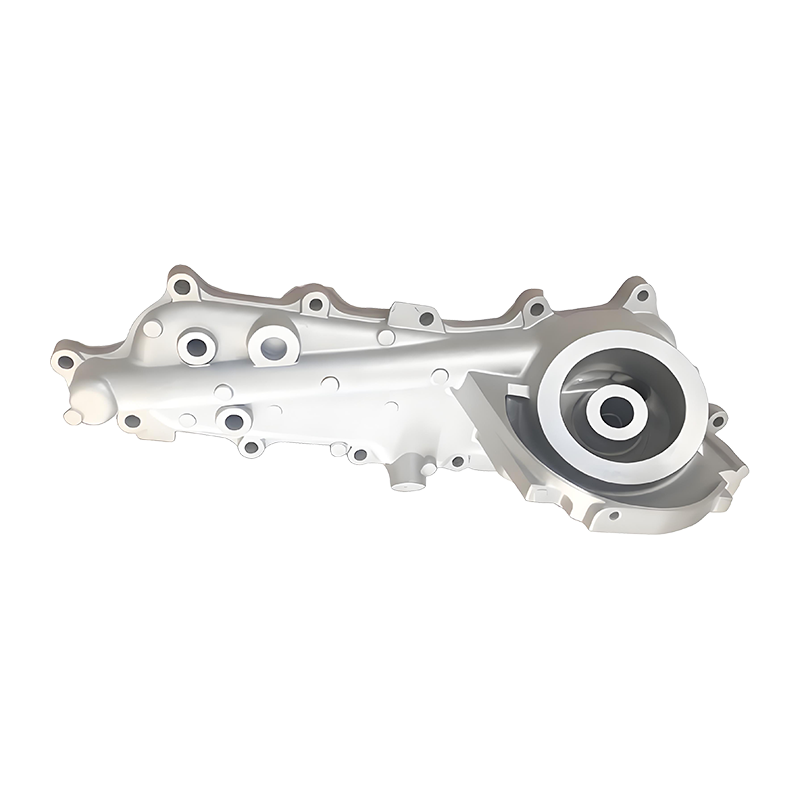
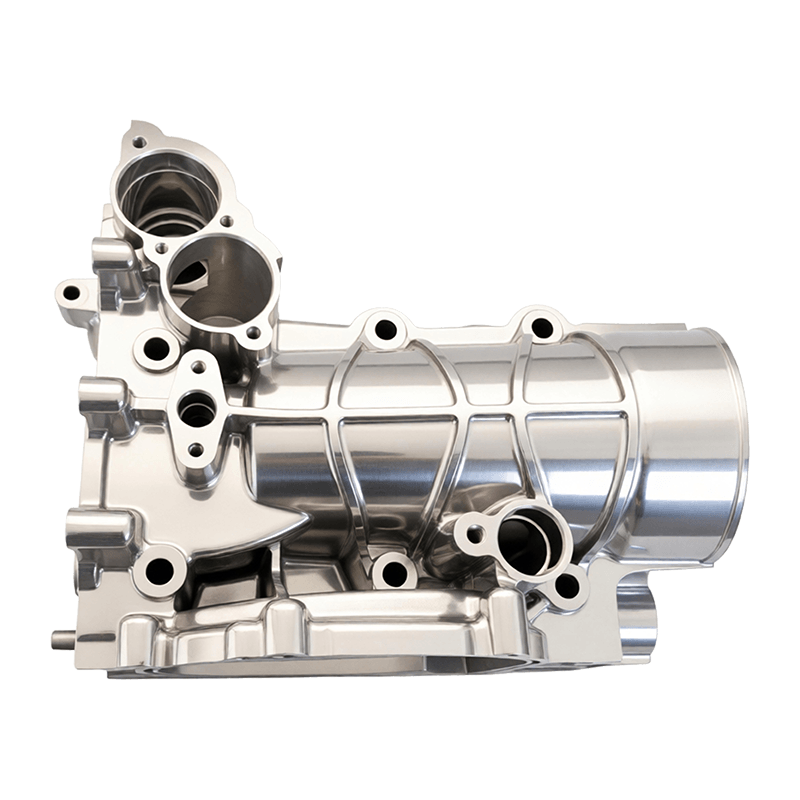
Product Examples: Clutch Housing and Automotive Oil Pan
Two die cast products from our range show how these principles are applied in practice. Both are aluminum alloy castings, and both can be specified against the function they must perform in the vehicle.
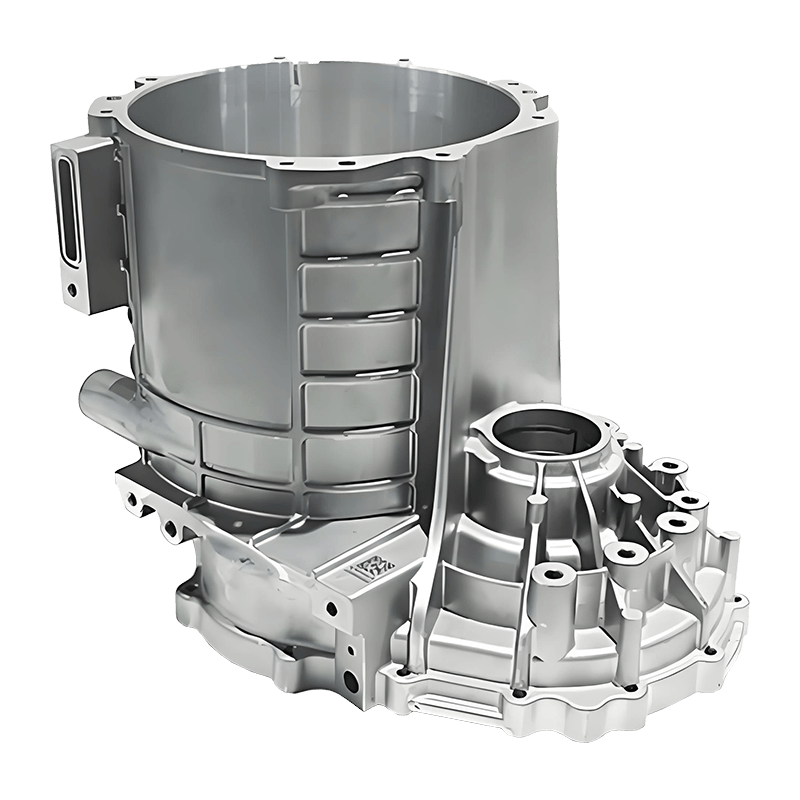
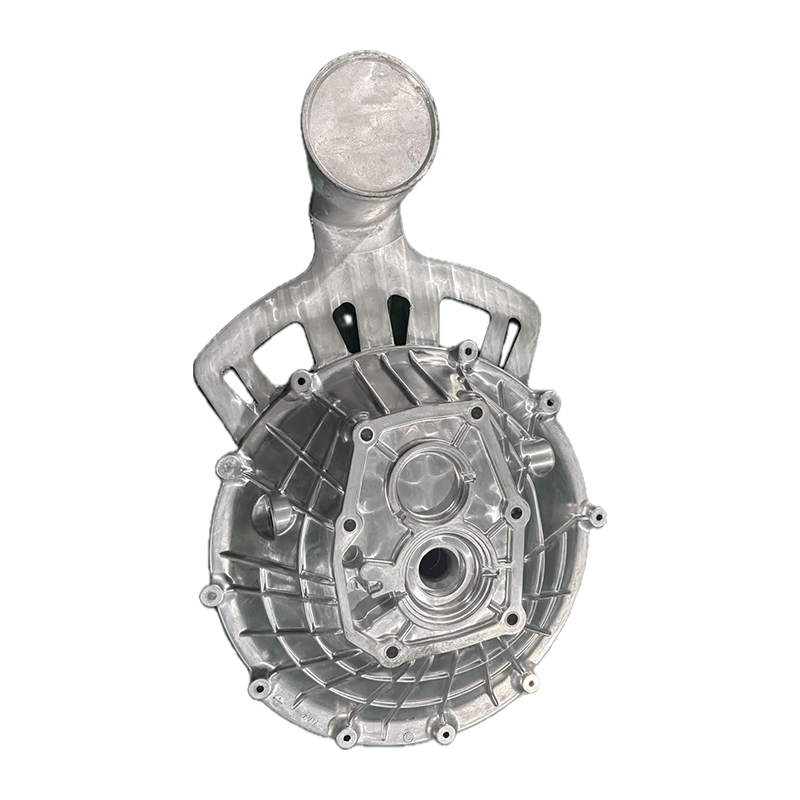
Die Casting Clutch Housing
The clutch housing is an integral casting with stiffening ribs that carry the bending loads of the drivetrain. Its sealing faces and bearing seats are designed for controlled tolerances, and the wall thickness is balanced to keep the part stiff without excess weight. It suits clutch and transmission enclosures where alignment and sealing both matter.
Die Casting Automotive Oil Pan
The automotive oil pan holds engine oil and must seal reliably against the engine block. Wall thickness control keeps the pan light and rigid, flange flatness protects the gasket seal, and the drain port is machined to a defined position. The part shows how die casting can produce a complex shape with thin walls and then add precision only where the function needs it.
Die Casting Automotive Oil Pan
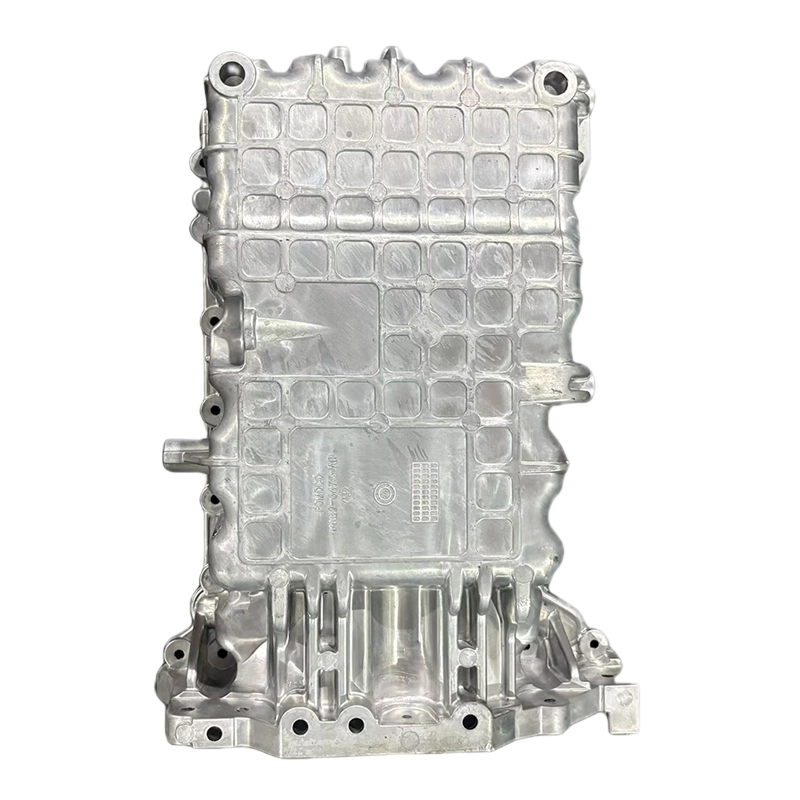
Both products can be discussed in detail during a technical review. Share the drawing, the target alloy, the annual volume, and the sealing or load requirement, so that the wall thickness, draft, and machining allowance can be confirmed before quotation.
Choosing a Die Casting Supplier for Automotive Parts
Choosing a supplier is as important as choosing the alloy. A good automotive supplier controls the melt, the mold, the process, and the finishing steps, and it can show evidence of that control. The checklist below covers the main areas to evaluate.
- Confirm the process capability for the alloy and part size you need, including hot or cold chamber equipment and the available clamping force.
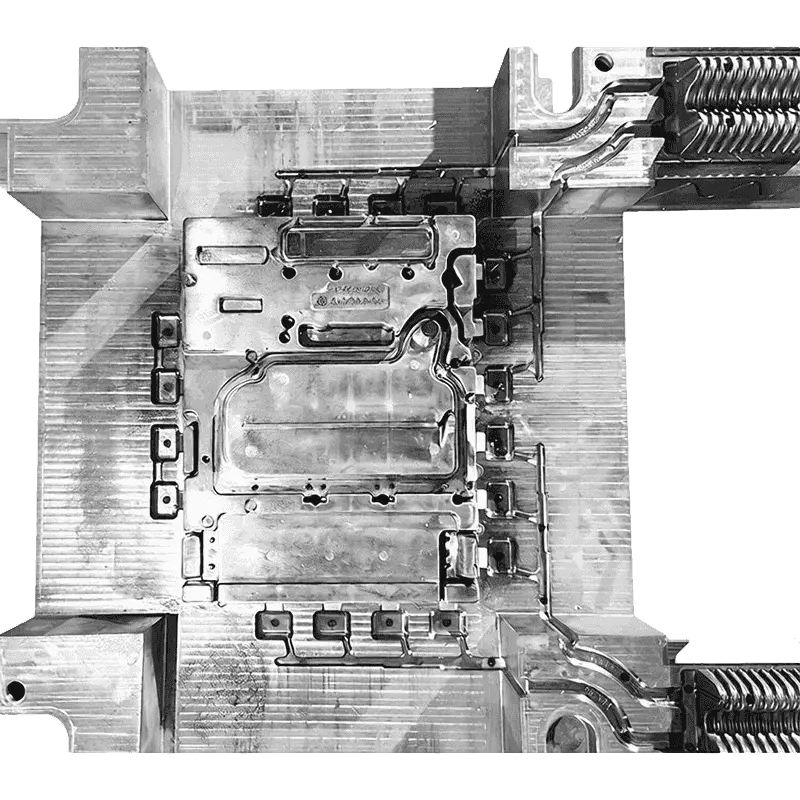
- Check mold design and maintenance capability, because cooling channels and gate design decide the quality of the casting.
- Review melt control, degassing, and alloy certificates, especially for magnesium and aluminum parts where porosity affects pressure tightness.
- Ask for inspection methods such as dimensional measurement, X ray or leak testing, and hardness checks on critical areas.
- Confirm secondary operations such as machining, shot blasting, heat treatment, and surface finishing, and whether they are done in house.
- Verify quality system certification and the documentation package required by automotive customers.
- Run a first article sample and a pilot batch before committing to full volume.
Design Rules That Lower Cost and Improve Quality
Good design makes a die cast part easier to produce and more reliable in service. Many of the rules below are simple, but they prevent the most common defects and cost overruns.
- Keep wall thickness as uniform as the function allows, because uneven walls cause porosity and warpage during solidification.
- Add draft angles to all faces that release from the mold, so the casting can be ejected without drag marks.
- Use fillets and radii generously, since sharp corners concentrate stress and trap metal flow problems.
- Specify tight tolerances only on functional features, and leave other faces at standard die casting tolerances.
- Plan machining allowances on bearing seats, sealing faces, and threads, so that the final surface is accurate.
- Consider leak paths and pressure tightness early, especially for oil, coolant, and fuel containing parts.
Common Mistakes When Sourcing Automotive Die Castings
Many sourcing problems come from a small set of avoidable decisions. Reviewing these points before a supplier is chosen can save months of rework.
- Choosing the alloy on price alone, without checking strength, temperature, and corrosion needs for the vehicle environment.
- Ignoring porosity limits for pressure tight parts, which causes leaks found only at final assembly.
- Specifying zinc for parts that will see high temperatures, where dimensional stability becomes a problem.
- Skipping the first article inspection, which leaves dimensional issues unnoticed until volume production.
- Failing to plan secondary operations in the quote, which adds cost and lead time later.
Quality Control and Inspection of Die Castings
Quality control in automotive die casting starts before the first shot and continues through the life of the mold. The aim is to catch the defects that matter for the function of the part, such as porosity in pressure tight housings, dimensional drift in bearing seats, and cold shuts that weaken thin sections.
Process control
Melt temperature, shot speed, injection pressure, and die temperature are recorded for each cycle. Small changes in these settings can shift the porosity level or the fill pattern, so the operator should compare current values with the approved process window. Stable process data is often the best early warning of a developing defect.
Dimensional inspection
Critical dimensions are checked with calibrated gauges, coordinate measuring machines, or optical systems at a defined frequency. Bearing bores, sealing faces, and mounting holes receive the most attention, because these features determine whether the part fits and seals in the assembly.
Leak and pressure testing
Parts that contain oil, coolant, fuel, or hydraulic fluid are tested for leakage under pressure. This test detects the porosity that can be invisible on the surface, and it protects the vehicle from leaks found only after assembly. The acceptance pressure and hold time should be written into the inspection plan.
Non destructive and destructive testing
X ray inspection is used on sample parts to check internal porosity in critical castings. Destructive tests on sample parts confirm tensile strength and elongation, and hardness checks confirm the heat treatment or surface condition where specified. The results should be linked to the production lot, so that any later field issue can be traced back.
Mold condition and maintenance
Die casting molds wear through heat checking, erosion, and the buildup of deposits. A planned maintenance schedule with wear measurements and polishing or repair records keeps the casting quality stable over the life of the program. Mold changes should be documented, because a modified cavity can change the dimensions of the part.
Vehicle Trends Shaping Die Casting Demand
Automotive die casting demand is shaped by three major trends: lightweighting, electrification, and the consolidation of parts. Each trend affects which alloy is chosen, how large the casting becomes, and how many separate components a vehicle needs.
- Lightweighting: reducing vehicle mass supports fuel economy and, in electric vehicles, driving range. Large aluminum castings replace steel assemblies where the weight saving is significant.
- Electrification: new energy vehicles need motor housings, battery trays, and power electronics enclosures, which are often produced by die casting for thermal and structural performance.
- Part consolidation: a single large casting can replace a welded assembly of many stamped parts, reducing joints, fasteners, and assembly time.
- Heat management: aluminum castings with integrated cooling channels are used in power electronics and drive units, where heat must leave the component quickly.
These trends are expected to keep die casting central to vehicle manufacturing. Suppliers that can handle larger castings, tighter quality controls, and a wider range of alloys are better placed to serve the next generation of vehicle platforms.
Frequently Asked Questions
Why are die casting automotive parts so common?
Die casting produces lightweight, strong, and accurate parts quickly and at low cost per part. It suits high volume production, and it allows several components to be combined into one casting.
What is the most common material for automotive die casting?
Aluminum is the most common material. It offers low density, good strength, and good corrosion resistance. Magnesium is used where extra weight reduction is needed, and zinc is used for small, complex, or decorative parts.
What is the difference between hot chamber and cold chamber die casting?
Hot chamber die casting is used for low melting point alloys such as zinc and magnesium, and it has a short cycle. Cold chamber die casting is used for aluminum and copper alloys, and it produces larger parts at higher injection pressure with a longer cycle.
Are die cast automotive parts strong enough for engine and chassis use?
Yes, when the alloy, wall design, and porosity control are specified correctly. Die cast aluminum parts are used for engine, transmission, and chassis components in high volume vehicles.
What tolerance can die casting achieve?
Typical tolerances of about plus or minus 0.1 mm are achievable on many features. Tighter tolerances are obtained by machining the functional surfaces after casting.
Why is wall thickness important in die casting?
Uniform wall thickness reduces porosity and warpage, and it keeps cycle time short. Thick sections solidify slowly and can trap gas or shrink, so the design should avoid sudden changes in thickness.
What are the advantages of magnesium die castings for vehicles?
Magnesium is the lightest structural die casting alloy in common use. It reduces weight in gearbox housings and steering components, which supports energy efficiency and range in new energy vehicles.
Can die cast parts be painted or plated?
Yes. The dense, smooth surface of die castings supports painting, anodizing, electrophoretic coating, and plating. Surface preparation and alloy choice affect the result, so the finishing supplier should be consulted early.
How long does it take to develop a die cast automotive part?
Mold design and manufacturing typically take several weeks to a few months, depending on complexity. First article samples, dimensional checks, and pilot batches add further time before full volume production begins.
What information should I send to request a quote?
Send the drawing with critical dimensions, the target alloy, the annual and lifetime volume, the leak or load requirements, the surface finish, and any secondary operations. Complete information allows the supplier to quote accurately on the first round.
Key Takeaways
Match the process, alloy, and supplier to the function of the part
Die casting automotive parts combine accuracy, strength, and low cost at volume, which is why the process is central to engine, transmission, chassis, and body production. Aluminum is the default alloy, magnesium and zinc serve specific weight and detail needs, and copper alloys are used for wear critical functions.
Choose the process from the alloy melting point, design the walls for uniform solidification, and select a supplier that controls melt, mold, and inspection. A first article and a pilot batch will confirm the decision before full production begins.