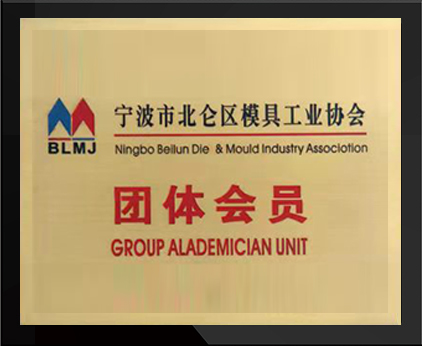
Ningbo Dinghong Mould Co., Ltd. is a China die casting manufacturer producing aluminum alloy telecommunication equipment parts — heat sinks, filter housings and RF enclosures — alongside the molds that make them. We handle mold design, die casting, precision finishing and inspection under one roof at our Beilun, Ningbo facility, serving telecom, automotive and new energy programs.
Our Telecommunication Die Casting Range
As a Die Casting Telecommunication Equipment Parts Manufacturer, we match product configuration to the application, operating limits, interfaces and acceptance criteria defined for each project.
Telecom hardware is a defined product family for us, not an offshoot of automotive work. The parts we cast sit in base station radio units, remote radio heads, microwave links, optical access equipment and outdoor cabinets, where aluminum die casting delivers the combination of heat spreading, RF shielding, structural rigidity and weight control that sheet metal and plastic cannot match in one part.
Two product lines anchor this category, and both are built to customer drawings rather than from a fixed catalogue.
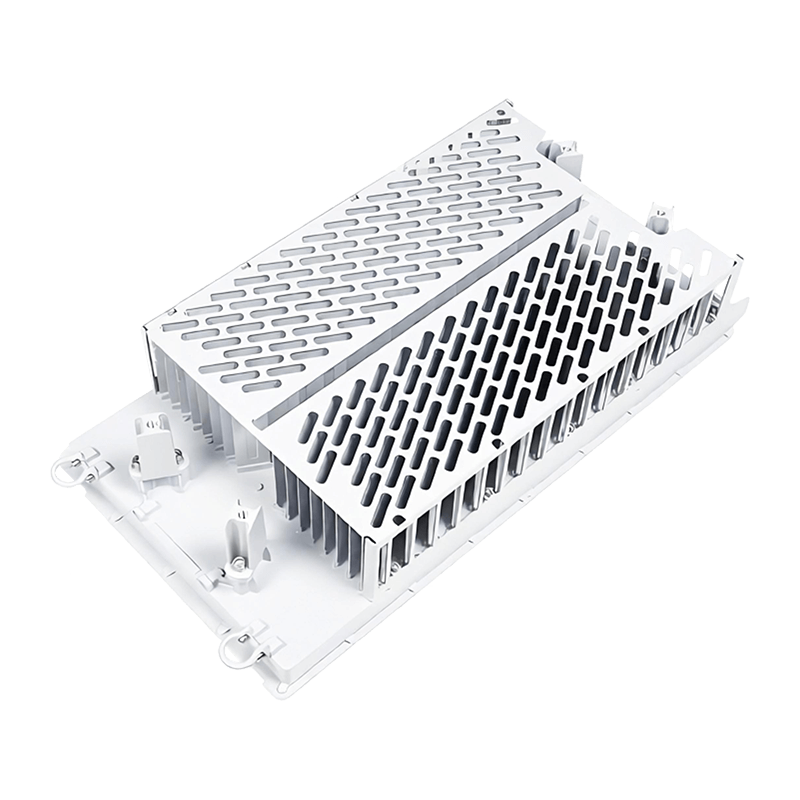
Die Casting Telecommunication Heat Sink
Pin-fin, plate-fin and cavity-type heat sinks for RRU, AAU and power amplifier modules. Wall thickness, fin pitch and base flatness are the governing variables, and we set them against the thermal load and airflow path of the enclosure.
Die Casting Telecommunication Heat Sink
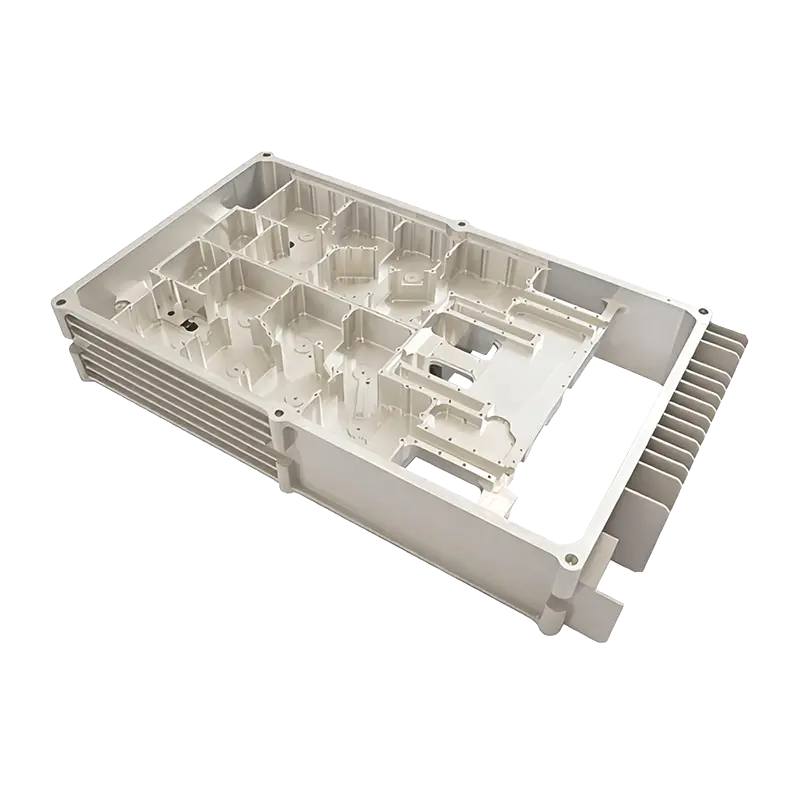
Die Casting Telecommunication Filter Housing
Cavity and cover housings for cavity filters, duplexers and combiner assemblies. Dimensional stability across the tuning cavity, sealing face flatness and thread integrity drive the process plan here.
Die Casting Telecommunication Filter Housing
Beyond these two lines we cast related telecom components: equipment chassis and mounting brackets, antenna and remote radio housings, waveguide and connector bodies, shielding covers and outdoor cabinet structural parts. The same tooling and finishing chain supports them, so a program can combine several part numbers in one development cycle.
Where Each Part Type Fits
Application fit is decided by the thermal, electrical and mechanical duty of the position, not by part size alone. The table below shows how we normally match telecom part types to their working conditions and to the process decisions that follow.
| Part type |
Typical position |
Governing requirement |
Process focus |
| Pin-fin heat sink |
RRU / AAU power stage |
Fin pitch, base flatness, thermal path |
Filling simulation, die cooling layout |
| Filter cavity housing |
Cavity filter, duplexer |
Cavity tolerance, sealing face flatness |
Dimensional control, machining allowance |
| RF enclosure / chassis |
Base station radio unit |
Shielding continuity, EMI gasket seat |
Wall uniformity, machined sealing faces |
| Mounting bracket / pole clamp |
Antenna and mast mounting |
Load capacity, corrosion resistance |
Rib design, surface treatment selection |
| Outdoor cabinet structural part |
Remote site equipment shelter |
Weather sealing, impact resistance |
Porosity control, coating specification |
Material and Specification Decisions
Telecom castings are normally produced in AlSi alloys such as ADC12 / A380 for general housings and heat sinks, or in higher-fluidity, higher-thermal-conductivity grades where the thermal duty justifies the cost. Alloy choice is confirmed against the drawing, the required thermal performance and the surface treatment route.
- Wall thickness: typically 1.5–4 mm for enclosures, with locally thicker bosses and ribs where threads or fasteners land.
- Draft and fillets: set during DFM review so parts release cleanly and stress concentrations stay out of thin sections.
- Machined features: sealing faces, O-ring grooves, connector bores and threaded holes are finished after casting to drawing tolerance.
- Surface treatment: chromate conversion, anodizing, powder coating or conductive coating, selected for corrosion class and grounding requirements.
- Leak and porosity limits: defined by pressure or IP requirement, then verified by X-ray or pressure testing where the application demands it.
Because these variables interact, we run mold flow analysis before cutting steel. Filling, solidification and cooling are simulated to expose air entrapment, cold shuts and shrinkage risk, and the die layout is adjusted while changes are still cheap.
From Tooling to Finished Parts
Our facility is equipped with high-precision CNC machining centers, large-scale EDM equipment, full-tonnage die-casting machines and automated trimming lines. That combination lets us take a telecom part from tool design through casting, deflashing, machining and inspection without handing the program between suppliers.
The technical chain runs through CAD/CAE/CAM development, mold flow analysis, structural design review, 2D drawing and 3D modelling, then manufacturing with in-process CMM checks at rough machining, fine machining, wire cutting and EDM stages. Assembly and final inspection close the loop before packing.
For programs that also need housings in adjacent families, our Die Casting Parts range covers automotive, new energy, structural, electrical and robot components on the same quality system.
Quality Control and Acceptance
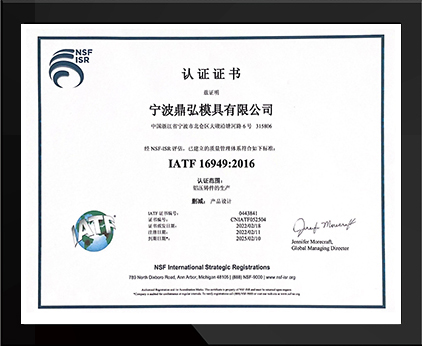
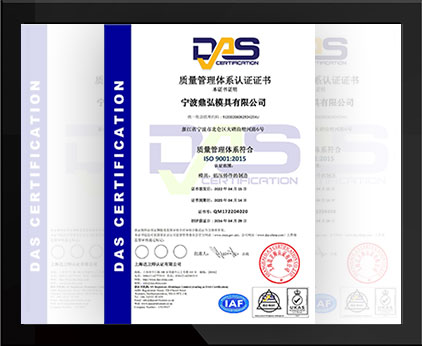
Dinghong has held ISO 9001 and IATF 16949 certification since 2017, with a quality system covering incoming, in-process and outgoing inspection. Inspection equipment includes CMM, X-ray flaw detection and spectrometer analysis, and results are recorded per batch so a telecom program can be traced back to its casting and machining data.
- Raw material verification and spectrochemical analysis before melting.
- First-article inspection and full-dimension check on trial samples.
- Wall thickness and critical-feature checks on trial castings.
- X-ray or pressure testing where internal soundness is specified.
- Pre-delivery inspection with documented dimensional and visual results.
Acceptance criteria are agreed at the quotation stage, so the inspection plan, sampling level and reporting format match what your receiving team will check.
Information We Use to Configure Your Solution
A reliable proposal needs the working point, not just a 3D file. The following inputs let us confirm alloy, die layout, machining scope and inspection plan in one pass.
| Input |
What we confirm with it |
| 3D model and 2D drawing with tolerances |
DFM review, draft, parting line, machining allowance |
| Material or alloy specification |
Alloy selection, thermal and mechanical performance |
| Annual volume and call-off pattern |
Cavity number, machine tonnage, tooling strategy |
| Surface treatment and colour |
Finishing route, masking, coating thickness |
| Leak, IP or shielding requirement |
Porosity limits, test method, gasket seat design |
| Inspection and documentation format |
Control plan, sampling, report package |
| Packing and delivery destination |
Packaging method, shipping scope, port routing |
Project Support and Delivery
Each telecom program is handled by a dedicated project contact from technical negotiation through sample approval and series production. We share design data digitally, hold technical reviews by video conference, and provide on-site engineering support for major projects when the schedule requires it.
Our site sits in the high-end mold park of Daqi Street, Beilun District, adjacent to Beilun Port, which keeps export logistics straightforward for customers in China, South America, Southeast Asia and the EU. Spare parts, replacement inserts and tooling maintenance are quoted alongside the initial program so the die stays productive through its service life.
Frequently Asked Questions
Can you produce both the mold and the cast parts?
Yes. We are integrated across mold design, manufacturing, die casting, finishing and trade, so a telecom heat sink or filter housing program can be quoted as tooling plus series parts from a single source.
What alloys do you cast for telecommunication parts?
Aluminum silicon alloys such as ADC12 and A380 are standard for housings and heat sinks, with alternative grades selected when thermal conductivity or mechanical strength requirements call for them. The final choice is confirmed against your drawing and application.
How do you control porosity in RF and filter housings?
Mold flow analysis sets the gate and overflow layout before the die is cut, and internal soundness is verified by X-ray or pressure testing where the specification requires it. Machined sealing faces are inspected dimensionally after finishing.
Which quality certifications apply to these parts?
Our quality management system has been certified to ISO 9001 and IATF 16949 since 2017, supported by CMM, X-ray and spectrometer inspection equipment with batch-level data recording.
Can you support custom designs rather than standard parts?
Telecom castings are built to customer drawings. We review the part design, run flow simulation, build the tool and produce finished parts, so custom geometry, mounting interfaces and coating specifications are part of the normal workflow.
How do we start a quotation?
Send the 3D model, 2D drawing with tolerances, alloy or performance requirement, annual volume, surface treatment and inspection expectations. With those inputs we return a configuration proposal covering tooling, casting, machining, finishing and delivery scope.


 English
 Español
 русский
 Français