Ningbo Dinghong Mould Co., Ltd. is a China Die Casting Structural Parts Manufacturer producing aluminum alloy load-bearing components for chassis, powertrain, energy storage and industrial equipment programs. Our Beilun facility integrates mold design, die casting, precision finishing and inspection, so a structural part moves from tool concept to serial shipment inside one controlled process chain.
What We Manufacture in This Category
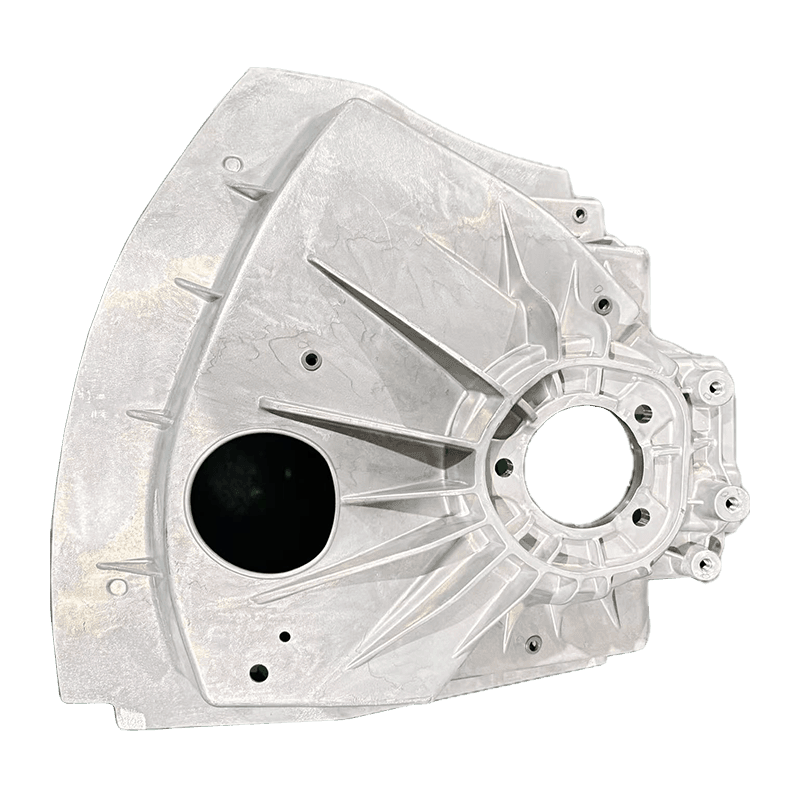
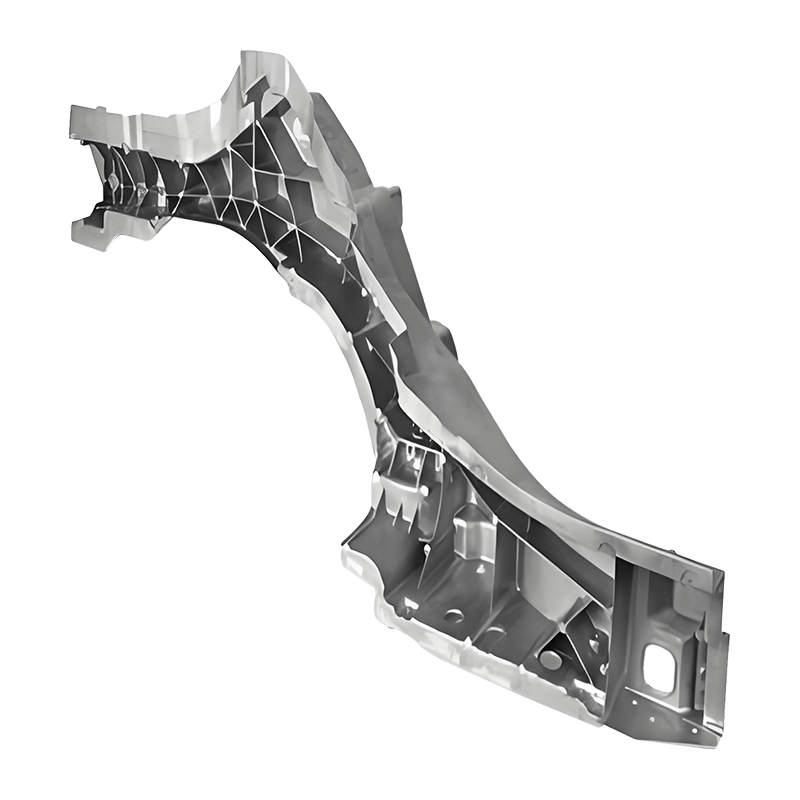
Structural die castings carry mechanical load, locate other components and often seal or dissipate heat at the same time. We produce these parts in aluminum alloy on full-tonnage die casting machines, with the mold built in-house and the machining, trimming and inspection handled on the same site. Typical programs include shock absorber towers, longitudinal beams, reducer and clutch housings, bearing plates and controller enclosures.
Because the tool and the casting come from one supplier, wall thickness, rib layout, draft and gate position are agreed before steel is cut, and any change found during mold flow analysis is reflected in the casting rather than discovered at trial.
Our Structural Part Range and Application Fit
Powertrain and Drive Housings
Reducer, clutch and hybrid housings that combine bearing seats, sealing faces and cooling passages in one casting.
Energy, Telecom and Equipment Frames
Enclosures, support plates and frames for storage, charging, telecommunication and robot platforms, produced under the same Die Casting Parts process discipline.
Material and Design Considerations
Structural castings are usually specified in Al-Si based die casting alloys, with the exact grade chosen against strength, elongation, thermal exposure and machinability. We review the drawing for rib depth-to-thickness ratio, uniform wall transitions, boss support, draft angle and the position of machined datums before committing to a tool layout.
- Load path and stiffness targets that set rib geometry and section thickness.
- Machined interfaces: bearing bores, sealing faces, bolt patterns and datum planes.
- Porosity-sensitive zones where pressure tightness or fatigue performance is required.
- Ejection, gating and cooling layout that keep cycle time and distortion under control.
Critical Specifications We Confirm
| Specification Area |
What We Fix With You |
Typical Method |
| Material and temper |
Alloy grade, heat treatment state, mechanical property targets |
Spectrometer check, batch records |
| Dimensional accuracy |
Datum scheme, toleranced features, GD&T callouts |
CMM inspection, full dimension report |
| Internal soundness |
Acceptable porosity level and location limits |
X-ray flaw detection, section sampling |
| Surface and sealing |
Finish requirement, leak-tightness, coating or passivation |
Visual and functional checks at trial |
| Capacity and takt |
Annual volume, batch pattern, machining content |
Machine and line allocation review |
From Mold Flow Analysis to First Article
Our design team works in CAD/CAE/CAM and uses mold flow analysis to simulate filling, cooling and stress distribution before the tool is manufactured. That early visualization exposes air entrapment, cold shut risk and unbalanced cooling, and it lets us adjust gate and overflow positions while changes are still inexpensive.
- Technical review of the part drawing, load case and interface requirements.
- Mold flow simulation and structural design of the tool, reviewed with your engineering contact.
- Tool manufacture with in-process CMM checks after rough machining, heat treatment, fine machining, wire cutting and EDM.
- Trial casting, sample wall thickness and full dimension verification, then first article approval.
Finishing, Machining and Line Integration
Structural parts rarely ship as cast. We machine bearing bores, sealing faces and mounting holes on high-precision CNC machining centers, and automated trimming lines remove gates and flash consistently across the batch. Where the part becomes a sub-assembly, we agree the delivered condition — as-cast, machined, leak tested or coated — so your line receives a component that fits the station it is planned for.
For programs that interface with existing fixtures or automated handling, we confirm locating points, lifting features and packaging orientation during the quotation stage rather than after tooling is complete.
Quality Assurance and Acceptance
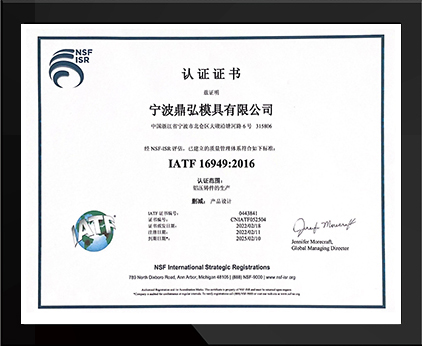
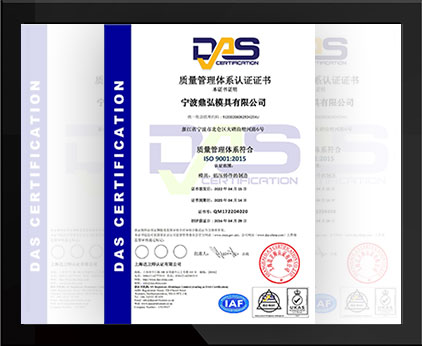
Dinghong Mould has held ISO 9001 and IATF 16949 certification since 2017, with incoming, in-process and outgoing inspection stages defined for every project. Our inspection equipment includes coordinate measuring machines, X-ray flaw detectors and spectrometers, and results are recorded per batch so that acceptance evidence accompanies the shipment.
- Raw material verification before the mold or casting batch is released.
- Process checks on standard and outsourced components during tool build.
- Assembly check, trial sample wall thickness and full dimension check.
- Pre-delivery inspection against the agreed control plan.
Information We Use to Configure Your Solution
To return a workable tooling and casting proposal, we need the part definition and the production context together. The list below is what our engineering and sales teams work from.
- 3D model and 2D drawing with tolerances, GD&T and datum scheme.
- Target annual volume, batch size and expected program life.
- Material grade, heat treatment and any pressure-tightness requirement.
- Machining scope, surface treatment and delivered condition.
- Interface details: mating parts, fastening points and envelope limits.
- Inspection and documentation expectations for first article and serial supply.
- Packaging, labeling and delivery destination.
Maintenance, Spares and Documentation
Die casting tools wear at gates, runners and high-heat areas, so we plan maintenance intervals with the customer and keep the tool history with the project file. Replacement inserts, cores and wear parts are produced from the same controlled drawings, which keeps a repaired tool dimensionally consistent with the original approval.
Project documentation covers the mold design record, inspection reports and the agreed control plan. We also support remote technical discussion and data sharing during development, and on-site engineering attendance for major project milestones when the program requires it.
Frequently Asked Questions
Which structural parts do you produce most often?
Shock absorber towers, longitudinal beams, reducer and clutch housings, bearing plates and controller enclosures make up most of our structural work, alongside frames and support plates for energy storage, charging and telecommunication equipment.
Can you take a part from drawing to serial casting?
Yes. We handle part design support, tool development, tool building, die casting and precision finishing, so the same team that simulates the mold also produces and inspects the casting.
How do you control porosity in load-bearing areas?
Gate and overflow positions are set from mold flow analysis, cooling is balanced to reduce shrinkage, and internal soundness is verified with X-ray inspection against the porosity limits agreed for each zone of the part.
What inspection data accompanies a shipment?
Batch records include material verification, dimensional results from CMM inspection and the relevant process checks, issued against the control plan approved at first article.
Do you support machined and coated deliveries?
We machine critical bores, faces and hole patterns in-house and coordinate surface treatment so the part arrives in the condition your assembly station expects.
How is a quotation prepared?
We quote from the part model, annual volume, material, machining scope and inspection requirements, then confirm tooling, casting and finishing content as one package. Send the drawing set and production target and our engineering team will respond with a configuration proposal.


 English
 Español
 русский
 Français