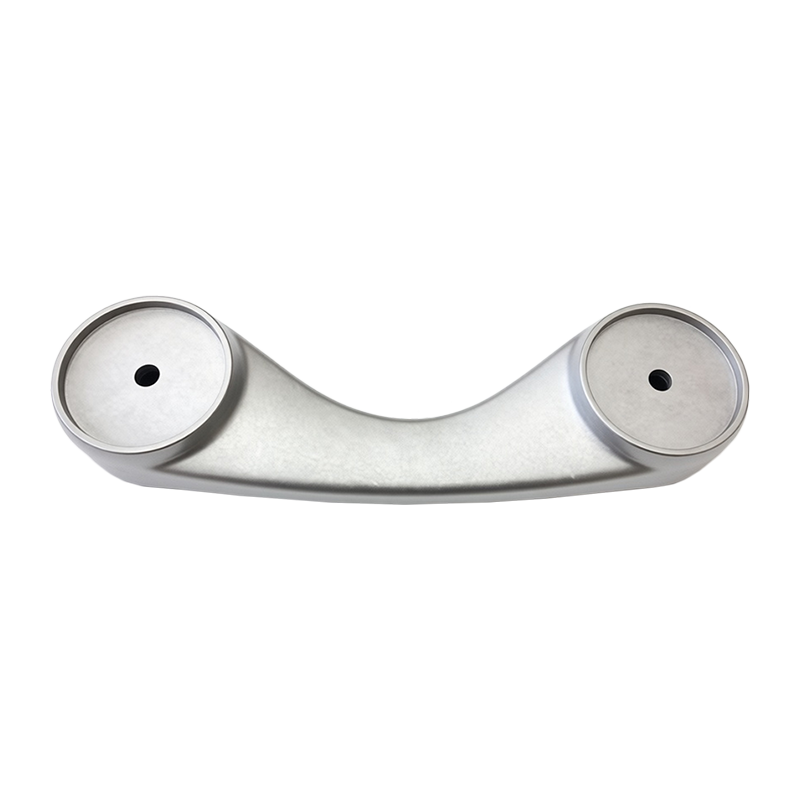
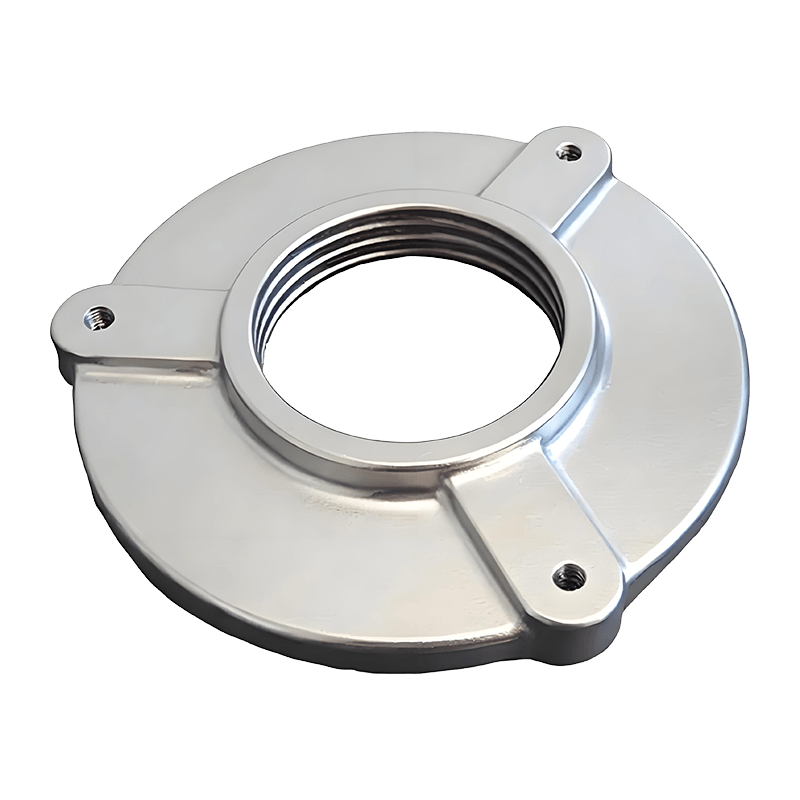
Ningbo Dinghong Mould Co., Ltd. is a China-based Die Casting Fitness Equipment Parts manufacturer producing aluminium alloy handles, flywheels and load-bearing components for strength machines, cardio frames and functional trainers. Our work covers mould design, die casting, precision finishing and export packing from one facility in Beilun, Ningbo.
Fitness equipment parts sit between two demands: they must carry repeated dynamic load and they must look clean after coating. We build the tool and the casting together so wall thickness, rib layout and machining allowance are decided before the first shot, not corrected afterwards.
Our Die Casting Fitness Equipment Parts Range
Our fitness range is organised around the parts that appear most often in machine design: grip interfaces, rotating mass, and structural brackets. Each type has its own tooling logic and finishing route.
| Part Type |
Typical Function |
Key Casting Considerations |
| Die Casting Fitness Equipment Handles |
Grip and pull interfaces on cable machines, rowers and selectorised stations |
Wall uniformity for grip feel, insert or thread placement, surface finish after coating |
| Die casting Fitness Part Flywheel |
Rotating mass in spin bikes, rowers and inertia-based trainers |
Mass distribution, bore concentricity, balance after machining |
| Structural brackets and pivot housings |
Frame joints, lever pivots, seat and handlebar adjustment blocks |
Bearing seat thickness, rib reinforcement, fatigue behaviour under cycling load |
| Covers, shrouds and end caps |
Guarding, cable routing and cosmetic closure on cardio and strength units |
Draft angle, ejector placement, powder-coat or anodised appearance |
Where a fitness part shares geometry with our other programmes — housings, bearing plates, brackets — the same tooling and inspection discipline applies. Related work is grouped under Die Casting Parts, and the full catalogue sits under Product & Services.
Material and Process Fit
Fitness equipment parts are almost always specified in aluminium alloy for the strength-to-weight ratio and the ability to cast ribs and bosses in one piece. We cast aluminium alloy components and machine the critical interfaces afterwards, which keeps the weight advantage while holding the tolerances that bearings and threads require.
- Alloy selection: chosen against the load case — a flywheel bore and a grip handle do not need the same mechanical properties.
- Wall and rib design: balanced during mould flow analysis so filling and cooling are predictable across the part.
- Machining allowance: planned at design stage for bores, bearing seats, threads and mounting faces.
- Finishing route: defined with the customer — as-cast, machined, powder coated, anodised or assembled.
Critical Specifications We Work To
Fitness parts fail in service for a small number of reasons: a bore that loses concentricity, a grip that cracks at a thread, a bracket that fatigues at a rib root. Our specification work concentrates on those points.
| Specification Area |
What We Confirm |
| Dimensional accuracy |
Drawing tolerances on bores, faces and hole patterns, verified on CMM |
| Internal soundness |
Porosity level at load-bearing sections, checked with X-ray flaw detection |
| Material composition |
Alloy grade verified by spectrometer against the agreed specification |
| Surface and coating |
Finish standard, coating adhesion and appearance agreed before production |
| Repeatability |
Process parameters locked after first-article approval, monitored batch to batch |
Tooling, Capacity and Production Flow
We are integrated across mould design, manufacturing, die casting, finishing and trade. That means a fitness equipment programme does not move between unrelated vendors: the tool that produces the part is designed, built, trialled and maintained by the same team that runs the casting cell.
- High-precision CNC machining centres for mould cavities, cores and finishing operations.
- Large-scale EDM equipment for deep ribs, sharp internal corners and hard-to-reach geometry.
- Full-tonnage die-casting machines matched to part size and projected area.
- Automated trimming lines for consistent gate and flash removal.
- CAD/CAE/CAM workflow with mould flow analysis before cutting begins.
Mould flow analysis is where most fitness part problems are removed cheaply. We simulate filling, cooling and stress distribution during design, then adjust gate position, runner size and cooling layout so the production tool starts from a stable process rather than a trial-and-error baseline.
Where Our Other Ranges Fit
Fitness equipment manufacturers often need adjacent components from the same supply chain. Our Die Casting Structural Parts range covers load-bearing brackets and towers, while Die Casting Electrical Parts covers housings and enclosures for consoles, drives and control boxes.
Quality Control and Acceptance
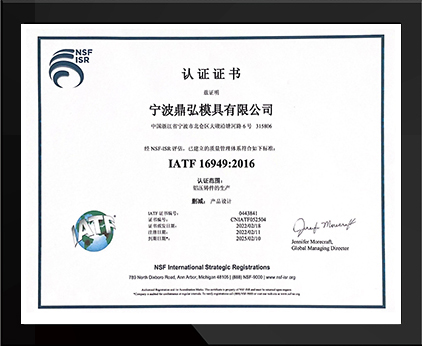
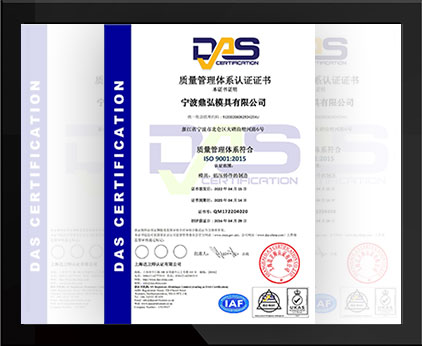
Dinghong has held ISO 9001 and IATF 16949 quality management system certification since 2017, with control applied at incoming, in-process and outgoing stages. Inspection equipment includes CMM, X-ray flaw detection and spectrometer analysis, and results are recorded per batch.
- Design data received and a quality plan with control points issued.
- Mould raw material dimension inspection and metallographic analysis.
- In-process checks on standard, outsourced and self-made components.
- Assembly check before trial.
- Trial sample wall thickness and full dimension verification.
- Final check before delivery, with documentation issued to the customer.
For fitness equipment customers, the acceptance conversation usually centres on first-article inspection, sample wall thickness, bore concentricity on rotating parts, and coating appearance. We agree the inspection items and sampling plan before the trial so the approval decision is based on the same data on both sides.
Configuration Options
- As-cast supply for parts where the customer machines or assembles in-house.
- Cast and machined with bores, faces, threads and hole patterns completed to drawing.
- Cast, machined and coated in the finish agreed for the machine platform.
- Insert integration where steel threads, bushings or wear surfaces are required.
- Sub-assembly where several cast parts are joined before shipment.
- Tooling supply as a standalone mould for customers who cast in their own plant.
Installation, Maintenance and Serviceability
Fitness equipment parts are replaced rather than repaired in the field, so serviceability is designed into the interface: consistent mounting geometry, standard thread sizes and stable bore dimensions so a replacement part fits without rework. Where a part carries a bearing or bushing, we machine the seat to a controlled tolerance and confirm it on CMM.
For moulds supplied to customers, we provide the tooling documentation, maintenance guidance and spare-part support needed to keep the tool running. Mould maintenance intervals depend on alloy, cycle count and part geometry, and we set them with the customer at handover.
Information We Use to Configure Your Solution
Our proposal is based on the working point, material and production target. The following inputs let us quote a realistic tool, cycle and finishing route rather than a placeholder price.
| Input |
Why We Need It |
| 3D model and 2D drawing |
Defines geometry, tolerances and machining allowance |
| Alloy and mechanical requirement |
Drives alloy choice and section design |
| Load case and duty cycle |
Sets rib layout and porosity limits at critical sections |
| Annual volume and batch pattern |
Determines cavity count and machine selection |
| Finishing and coating standard |
Defines the post-casting route and appearance criteria |
| Inspection and documentation requirements |
Sets the acceptance plan and reporting format |
| Packing and delivery destination |
Shapes packaging and shipping scope |
Project Support and Delivery Scope
Our engineering team works from part design through tool development, tool building and parts production. Project management is handled by a named contact, with remote technical support by video conference and digital data sharing, and on-site engineering support for major projects where required.
- Design review and mould flow analysis before tool cutting.
- Sample submission with dimensional report for approval.
- Production documentation, inspection records and packing specification.
- Delivery through Beilun Port, with export packing suited to the destination.
Frequently Asked Questions
Can you produce fitness equipment parts from our existing drawings?
Yes. Send the 3D model and 2D drawing with tolerances, alloy and finishing requirements. We review the geometry for castability, propose adjustments where needed, and quote the mould and part price against the agreed revision.
Do you supply both the mould and the cast parts?
We supply both. Some customers take a mould and cast in their own plant; others take finished parts from us. Because we design, build and run the tool in the same facility, the casting process is developed on the actual production tool.
How do you control porosity in load-bearing fitness parts?
Porosity control starts in design: gate position, runner size and cooling layout are set through mould flow analysis, and rib and boss geometry is adjusted to avoid isolated thick sections. X-ray flaw detection verifies internal soundness at the sections that carry load.
What finishing options are available for handles and flywheels?
Parts can be supplied as-cast, machined, or machined and coated. Coating and surface standards are agreed before production so appearance criteria are clear at first-article inspection.
What documentation accompanies a shipment?
Shipments are accompanied by the inspection records agreed for the project, covering dimensional results, material composition and internal soundness checks where specified, plus the packing specification for the delivery destination.


 English
 Español
 русский
 Français