Ningbo Dinghong Mould Co., Ltd. is a China-based Die Casting Other Parts Manufacturer working from part design through tooling, die casting, precision finishing and inspection. The range under this category covers the aluminum alloy components that sit outside our named automotive, energy, telecommunication and equipment families — brackets, covers, housings, plates, handles, trays and similar custom parts.
We operate a 20 mu facility at No. 6 Yantanghe Road, Daqi Street, Beilun District, Ningbo, next to Beilun Port. Mold design, die casting, finishing and trade run under one roof, which keeps tooling and production data in the same engineering loop.
What This Category Covers
Die Casting Other Parts is the flexible end of our aluminum alloy die casting program. These are parts specified by drawing rather than by a standard platform: mounting brackets, end covers, control boxes, heat-sink bodies, machine plates, structural connectors, appliance housings and non-standard fittings. They share the same process chain as our automotive work — mold flow analysis, tool manufacture, high-pressure die casting, trimming, CNC finishing and dimensional verification.
Because the geometry is project-specific, the engineering conversation starts with function. A part that carries load needs wall thickness, rib layout and gate position treated differently from a part that mainly encloses or dissipates heat. We confirm the working point before committing to a tool design.
Our Die Casting Range
Other Parts sits inside the wider Die Casting Parts family. The table below shows how each part family is positioned and where a new project usually belongs.
| Part family |
Typical parts |
Application focus |
| Die Casting Fuel Automotive Parts |
Housings, clutch bodies, bearing plates |
Powertrain and driveline load paths |
| Die Casting New Energy Parts |
Reducer housings, e-drive covers |
Electric drive and hybrid platforms |
| Die Casting Structural Parts |
Shock towers, chassis nodes |
Stiffness, fatigue and crash-relevant geometry |
| Die Casting Telecommunication Equipment Parts |
Enclosures, RF housings, heat sinks |
Sealing, flatness and thermal paths |
| Die Casting Electrical Parts |
Appliance bodies, trays, handles |
Surface finish and food-contact-adjacent housings |
| Die Casting Robot Parts |
Joint housings, limb segments |
Weight reduction with repeatable interfaces |
| Die Casting Other Parts |
Brackets, covers, plates, custom fittings |
Non-platform parts built to drawing |
Materials and Part Design Considerations
Most parts in this category are produced in aluminum alloy, chosen for the strength-to-weight ratio, thermal conductivity and castability that suit housings, brackets and heat-dissipating structures. Alloy selection follows the required mechanical properties, corrosion exposure and finishing route rather than a default grade.
- Wall thickness: kept as uniform as the function allows, since abrupt changes drive porosity and cold shuts.
- Ribs and bosses: positioned to carry load and to feed material toward thick sections during filling.
- Draft and parting line: agreed early so ejection and trimming stay stable in production.
- Machining allowance: defined on sealing faces, bearing seats and any surface that must meet a flatness or fit requirement.
- Inserts and threads: reviewed where the casting alone cannot carry the connection.
Mold Flow Analysis Before Tooling
Our design team uses CAD/CAE/CAM software and mold flow analysis to visualize filling, cooling and stress distribution before a tool is cut. The simulation shows where air may trap, where shrinkage porosity is likely and how the thermal balance behaves across the cavity. Design changes are made on screen, not on the tool.
This step shortens the development cycle and reduces trial-and-error cost for the customer. For a new bracket or cover, the analysis output also gives us a realistic basis for quoting cycle time and expected dimensional behavior.
Production Equipment and Capacity
The facility is equipped with high-precision CNC machining centers, large-scale EDM equipment, full-tonnage die-casting machines and automated trimming lines. That combination supports both the tool shop and the casting line, so a part does not leave the process chain between tooling and finishing.
- CNC machining centers for mold cavities, cores and finished part features.
- Large-scale EDM for deep ribs, sharp internal corners and hard detail.
- Full-tonnage die-casting machines matched to part size and projected shot weight.
- Automated trimming lines for consistent gate and flash removal.
Machine selection for a given part is based on projected area, wall thickness, required cycle and the finishing operations that follow. Where a part needs secondary machining, the fixture and datum strategy are planned together with the casting layout.
Quality Control and Inspection
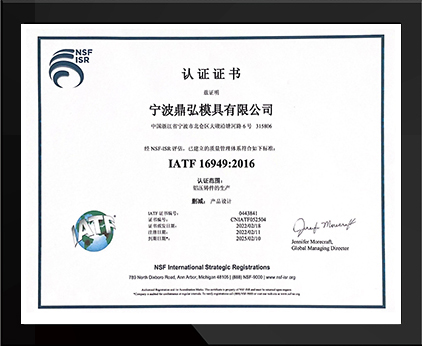
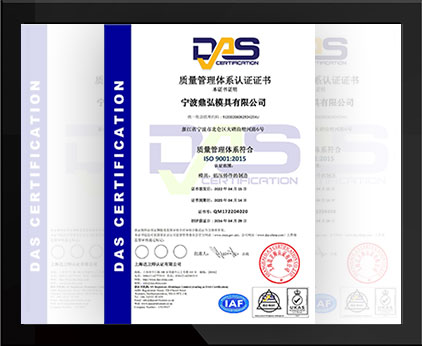
Since 2017 the company has held ISO 9001 and IATF 16949 quality management system certification. Inspection covers incoming material, in-process production and outgoing release, with data recorded per batch.
- CMM: dimensional verification of mold components and cast parts against the drawing.
- X-ray flaw detection: internal porosity and void checks on critical sections.
- Spectrometer: alloy composition confirmation on incoming material.
- Mold trial: sample wall thickness and full dimension check before delivery.
For parts with sealing or fit requirements, we agree the control points and the inspection method with the customer before the first trial, so acceptance criteria are fixed rather than negotiated after samples arrive.
Information We Use to Configure Your Solution
A reliable quotation for a custom die-cast part depends on a small set of inputs. When these are available, we can propose tooling, process route and finishing scope in one pass.
| Input |
What we confirm from it |
| 3D model and 2D drawing with tolerances |
Parting line, draft, machining allowance, control dimensions |
| Material and surface treatment |
Alloy grade, finishing sequence, corrosion protection |
| Annual volume and batch pattern |
Cavity count, machine tonnage, cycle time, tool life planning |
| Functional requirements |
Load path, sealing, thermal performance, weight target |
| Inspection and acceptance criteria |
Sampling plan, CMM report scope, X-ray coverage |
| Packaging and delivery destination |
Returnable or expendable packaging, shipping scope from Beilun Port |
Project Flow and Documentation
Our technical process runs from marketing information and technical negotiation through preliminary design, customer confirmation, project launch, mold flow analysis, structural design review, 2D drawings and 3D modelling, then release to manufacturing. Manufacturing follows design data, six-face machining, hole machining, NC roughing, heat treatment, NC finishing, wire cutting, EDM, polishing, final check and assembly.
Customers receive the design data for confirmation at the defined checkpoints, and inspection records accompany the mold trial and the production batches. Where a project requires on-site engineering support, we arrange it for major builds; routine technical questions are handled through video conferencing and digital data sharing.
Maintenance, Spare Parts and Serviceability
Die casting tools are built for a defined production life, and we plan wear items accordingly. Sliders, inserts, ejector pins and gate areas are the components most likely to need attention, so their replacement strategy is considered during design rather than after the tool is in service.
- Spare inserts and wear parts can be produced from the retained tool data.
- Tool maintenance intervals are set against the actual shot count and material used.
- Dimensional records from the original build support later repair and re-qualification.
Frequently Asked Questions
What kinds of parts are produced under Die Casting Other Parts?
This category covers custom aluminum alloy components that are not part of a named platform family — brackets, covers, control housings, machine plates, appliance bodies, handles, trays and non-standard fittings. Each one is produced to the customer's drawing and functional requirement.
Can you handle both the mold and the production parts?
Yes. We integrate mold design, mold manufacturing, die casting, precision finishing and trade, so a project can move from part design and tool development through tool building to series production without changing suppliers. Our Die Casting Molds range covers the tooling side of the same chain.
How do you confirm that a casting meets the drawing?
Inspection uses CMM for dimensions, X-ray for internal soundness and a spectrometer for alloy composition, with results recorded per batch. The mold trial includes sample wall thickness and full dimension checks before delivery, and acceptance criteria are agreed with the customer beforehand.
What information do you need to quote a custom part?
A 3D model and 2D drawing with tolerances, the material and surface treatment, annual volume and batch pattern, functional requirements, inspection criteria and the delivery destination. With those inputs we can propose the tooling concept, process route and finishing scope.
Which industries do your die-cast parts serve?
Automotive and new energy vehicle programs, home appliances, telecommunication equipment, electrical products, robotics, photovoltaic and energy storage hardware, pumps and valves, and fitness equipment. The marketing network covers China, South America and Southeast Asia, with the European market under active development.


 English
 Español
 русский
 Français