
 English
 Español
 русский
 Français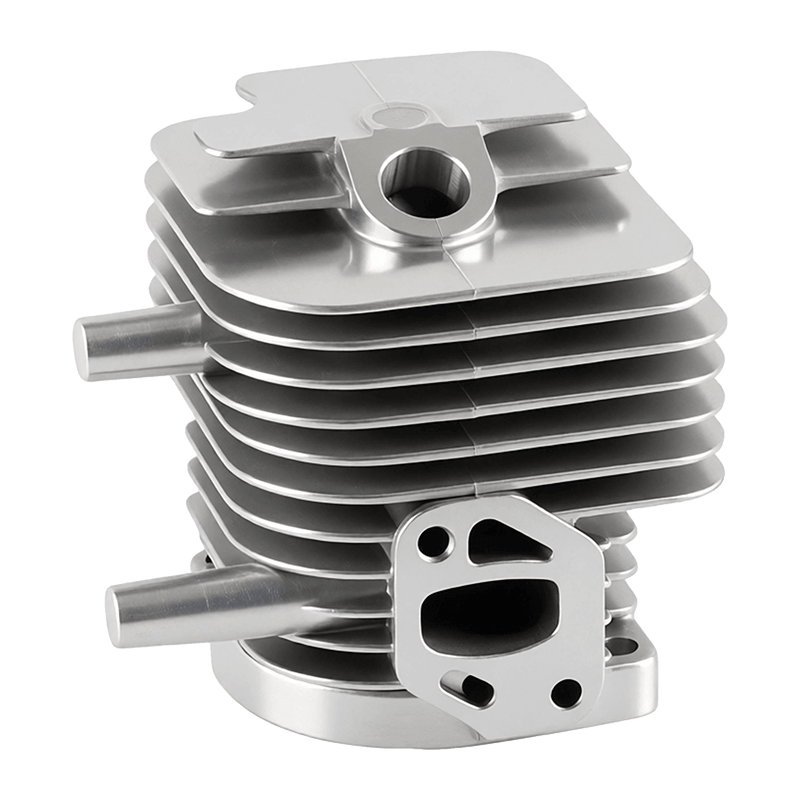

One large aluminum die casting can now replace what used to be 70 to 130 separately stamped and welded steel parts in a...
READ MORE
Content
Materials & Manufacturing
Yes, Aluminum Die Casting Parts are consistently lighter than Cast Iron Parts when engineered to carry the same load capacity. Depending on geometry and wall thickness, a component produced through aluminum die casting can weigh between 45% and 60% less than a cast iron equivalent designed to handle an identical structural or mechanical load — without giving up the strength that the application demands.
The most direct explanation for the weight difference lies in raw material density. Aluminum alloys commonly used in die casting, such as A380 or ADC12, have a density of approximately 2.7 g/cm³, while gray or ductile cast iron typically ranges between 7.0 and 7.3 g/cm³. This means that, volume for volume, cast iron is roughly 2.6 times heavier than aluminum. Aluminum Die Casting Parts take direct advantage of this density gap, allowing manufacturers to produce components with the same external dimensions and structural footprint at a fraction of the mass.
This does not mean aluminum is simply a lighter substitute in every scenario. Cast iron's higher density also contributes to greater stiffness and vibration absorption in certain load conditions, which is why it remains dominant in engine blocks, machine bases, and heavy industrial housings where mass itself is not a liability.
Info
Density alone does not tell the full story of how a finished part behaves in service. Aluminum Die Casting Parts benefit from a favorable stiffness-to-weight relationship once wall thickness and internal geometry are properly optimized, allowing a well-designed aluminum housing to match the perceived rigidity of a cast iron equivalent while weighing considerably less.
Weight alone is not a meaningful comparison unless it accounts for how much load each material can bear per unit of mass. This is where the strength-to-weight ratio becomes the more useful metric. Aluminum Die Casting Parts generally achieve a strength-to-weight ratio that is two to three times higher than standard cast iron parts, largely because aluminum alloys can be reinforced through wall geometry, ribbing, and heat treatment without adding significant mass.
A typical A380 aluminum die casting alloy offers a tensile strength of around 320 MPa, while gray cast iron generally falls between 150 and 250 MPa depending on grade. Ductile cast iron can reach higher tensile values, sometimes exceeding 400 MPa, but it does so at a substantially higher mass penalty. For applications where load capacity is measured relative to component weight, such as automotive brackets, housings, and enclosures, Aluminum Die Casting Parts frequently outperform cast iron on a per-kilogram basis.
To illustrate the practical difference, the table below compares approximate weights of common mid-sized industrial components designed to bear a similar static load, produced first in cast iron and then redesigned using aluminum die casting techniques.
| Component Type | Cast Iron Weight | Aluminum Die Casting Weight | Weight Reduction |
|---|---|---|---|
| Pump Housing | 4.8 kg | 2.1 kg | 56% |
| Gearbox Cover | 3.2 kg | 1.5 kg | 53% |
| Bracket Assembly | 1.6 kg | 0.7 kg | 56% |
| Motor End Frame | 6.5 kg | 2.9 kg | 55% |
Across these four common component categories, the average weight reduction achieved by switching to Aluminum Die Casting Parts sits between 53% and 56%, while maintaining a comparable structural load rating through wall thickness optimization and rib reinforcement.
Simply swapping cast iron for aluminum without redesigning the part would result in a weaker component. To match the original load capacity, engineers typically apply the following adjustments when converting a design to Aluminum Die Casting Parts:
Warning
Converting a cast iron design to aluminum without any of these adjustments will not match the original load capacity. The weight advantage of Aluminum Die Casting Parts only holds up when wall thickness, ribbing, and heat treatment are deliberately re-engineered around the new alloy.
These techniques allow Aluminum Die Casting Parts to reach load ratings close to their cast iron counterparts while retaining most of the weight advantage, though the exact percentage varies by application and load direction.
For applications demanding even lower mass than standard aluminum alloys allow, Aluminum Magnesium Die Casting Parts offer a further reduction in weight. By blending magnesium into the aluminum alloy composition, manufacturers can lower the overall density of the finished part while improving castability for thin, complex geometries. This alloy family is frequently selected when a component must approach the weight savings of pure magnesium casting while retaining more of the corrosion resistance and mechanical stability associated with aluminum.
In direct comparison to cast iron, Aluminum Magnesium Die Casting Parts can extend the weight reduction range beyond 60% for certain thin-wall housings and covers — making every gram of unsprung or handheld weight count.
Success
Transportation and portable equipment applications are where Aluminum Magnesium Die Casting Parts deliver the clearest win: lower mass, retained corrosion resistance, and better castability for thin, complex geometries than either standard aluminum or cast iron alone.
Weight reduction is rarely the only factor in a material decision. The table below summarizes the practical trade-offs between the two options beyond raw weight.
| Factor | Aluminum Die Casting Parts | Cast Iron Parts |
|---|---|---|
| Corrosion Resistance | High (natural oxide layer) | Low without coating |
| Vibration Damping | Moderate | High |
| Tooling Cost | Higher upfront, faster cycle | Lower upfront, slower cycle |
| Thermal Conductivity | High | Moderate to low |
| Machining Cost After Casting | Lower (softer material) | Higher (harder material) |
While Aluminum Die Casting Parts generally carry a higher tooling investment, the faster production cycle and reduced machining requirements often offset that cost across mid-to-high volume manufacturing runs, particularly when the finished part also benefits from lower shipping weight.
Not every industry places the same value on weight savings, but several sectors depend heavily on the reduced mass that Aluminum Die Casting Parts provide compared to cast iron alternatives.
Reducing unsprung and structural weight directly improves fuel efficiency and handling. Aluminum Die Casting Parts are widely used for transmission housings, brackets, and structural covers where every kilogram removed contributes to overall vehicle efficiency.
Tools, enclosures, and equipment housings that must be carried or repositioned frequently benefit from the lighter mass of Aluminum Die Casting Parts, reducing operator fatigue without sacrificing the structural load capacity needed to protect internal components.
In sectors where mass reduction has a compounding effect on total system performance, Aluminum Magnesium Die Casting Parts are often favored over both cast iron and standard aluminum, further reducing overall assembly weight while still meeting load and vibration requirements.
Beyond the end application, lighter components also translate into measurable savings during shipping, warehousing, and assembly. A pallet of Aluminum Die Casting Parts destined for an assembly plant can weigh less than half of an equivalent shipment of cast iron parts, reducing freight costs and easing manual handling requirements on the production floor. For manufacturers shipping components internationally, this weight difference can meaningfully affect total landed cost, particularly for high-volume orders where freight is charged by weight rather than by volume.
Beyond alloy selection, several manufacturing variables affect how much weight can realistically be saved when converting a cast iron design to an aluminum die casting process.
Danger
Skipping wall thickness and gate design optimization is the single most common reason aluminum die cast redesigns fail to hit their target weight or load rating. Treating alloy substitution as a like-for-like swap, without re-engineering these variables, risks a part that is both under-strength and heavier than it should be.
Manufacturers who optimize these variables consistently achieve the higher end of the weight reduction range when comparing finished Aluminum Die Casting Parts to their cast iron predecessors.
For buyers and design engineers evaluating both options, the decision generally comes down to the following priorities. If the application values reduced shipping and handling weight, corrosion resistance, and faster production cycles, Aluminum Die Casting Parts are the stronger choice, and Aluminum Magnesium Die Casting Parts can be considered when additional weight savings are required. If the application prioritizes maximum vibration damping, compressive strength, or long-term wear resistance in stationary heavy machinery, cast iron remains a proven and cost-effective option despite its higher mass.
In most modern manufacturing contexts where weight, energy efficiency, and material handling costs are increasingly important, Aluminum Die Casting Parts offer a measurable and repeatable weight advantage over Cast Iron Parts for components engineered to the same load capacity, without requiring a significant compromise in structural performance when the design is properly optimized for the casting process.
One large aluminum die casting can now replace what used to be 70 to 130 separately stamped and welded steel parts in a...
READ MOREDie casting is a manufacturing process that forces molten metal under high pressure into a reusable steel mold to pro...
READ MORE1 Introduction The commercial application of aluminum alloy die castings can be traced back to 1915. After a century of ...
READ MOREOn the afternoon of June 23, 2022, the "2022 Greater Bay Area Youth Exchange Conference and Visit Activity" hosted by t...
READ MORE

Sun Yuejun: +86-13806631860
Wang Shiyong: +86-15958891460 / 15058297768
Dove Yao: +86-18625086675


Copyright © Ningbo Dinghong Mould Co., Ltd. Rights Reserved. Custom Precision Die Casting Aluminum Alloy Parts Manufacturers
