
 English
 Español
 русский
 Français
Die casting is a manufacturing process that forces molten metal under high pressure into a reusable steel mold to pro...
READ MORE
Content
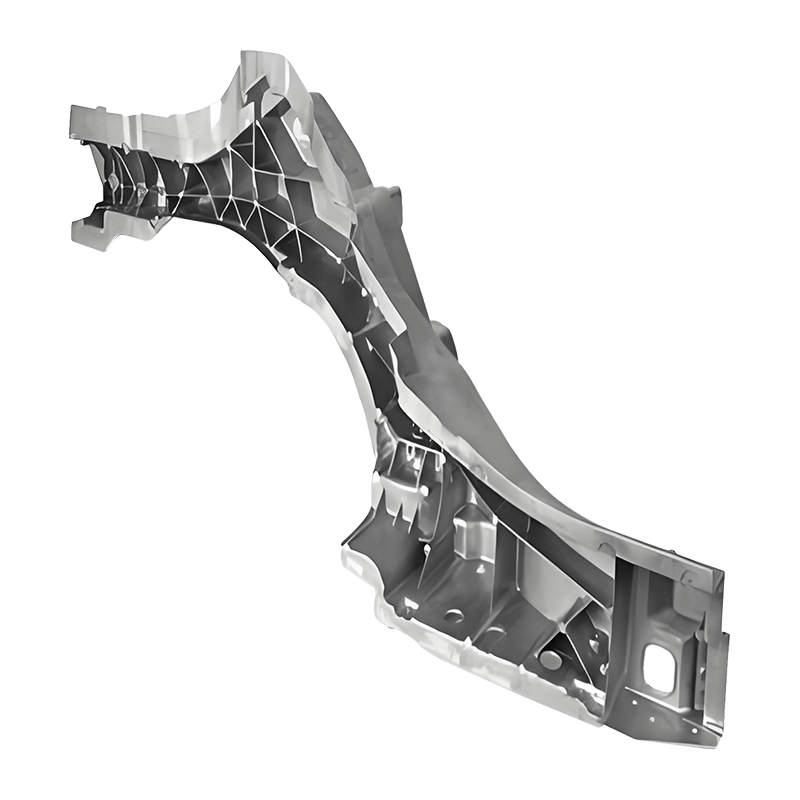
Conventional vehicle underbodies are built from dozens of stamped steel sheets, joined by hundreds of spot welds, rivets, and structural adhesive beads. Every joint is a potential source of dimensional variation, added weight from overlapping material, and an additional station on the assembly line. Die casting collapses that entire sub-assembly into a single aluminum shot, and the part count reduction this achieves has become one of the most quoted efficiency gains in electric vehicle manufacturing.
Beyond part count, removing welded joints also removes weight — overlapping flanges and reinforcement plates needed to carry weld loads typically add 10 to 15 percent extra material compared with a casting designed to carry the same load directly through its wall geometry. For a segment where every kilogram removed from the structure translates into extended range or reduced battery size, that weight saving compounds directly into a cost and performance advantage.
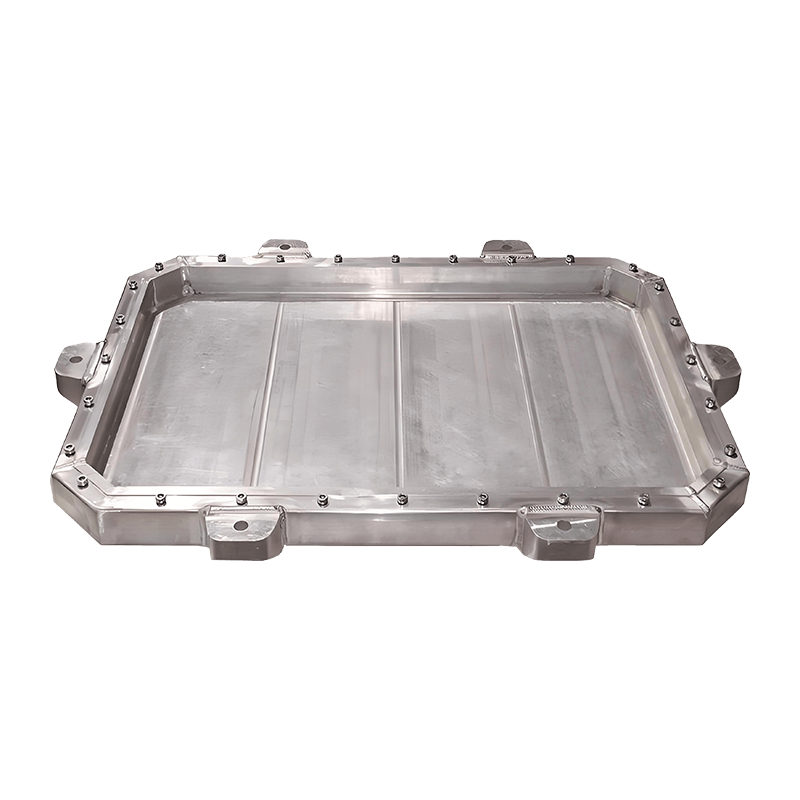
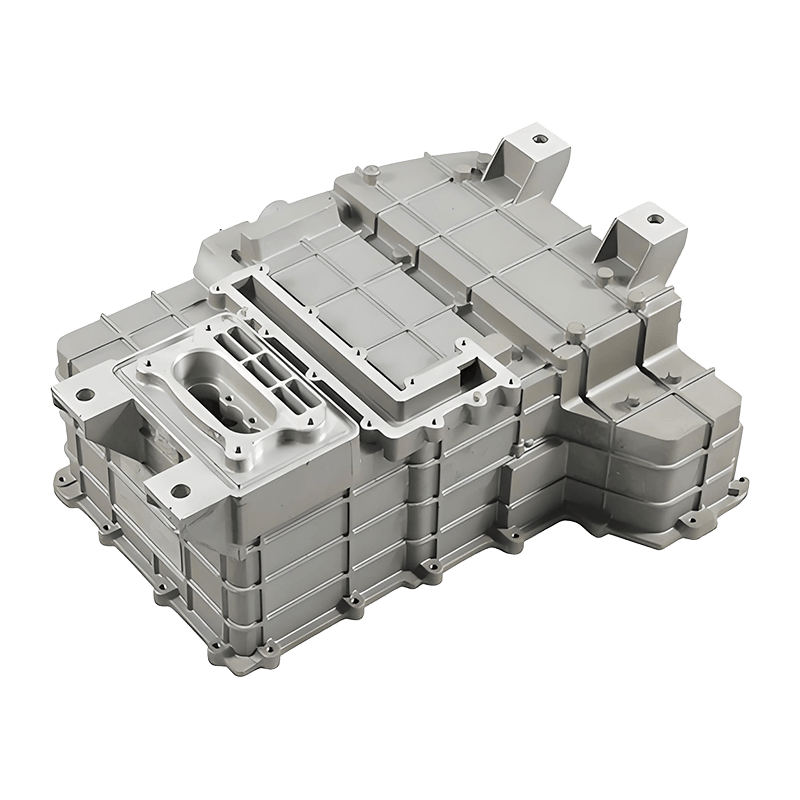
The battery tray is usually the single largest die cast part on an electric vehicle, often exceeding 1.5 by 1.8 meters in footprint. It has to do three jobs at once: seal the battery pack against moisture and dust to at least an IP67 rating, absorb crash energy without intruding into the cell compartment, and manage heat from the battery through integrated cooling channels rather than a separate bolted-on cold plate.
Integrating cooling channels directly into the casting — rather than attaching a separate cooling plate afterward — removes a bonded interface that is a common source of coolant leaks over a vehicle's service life. It does, however, raise the difficulty of the casting process itself, since thin internal channel walls are more prone to incomplete fill and porosity than the tray's outer walls, which is one reason battery trays are almost always produced on vacuum-assisted die casting equipment rather than conventional high-pressure die casting.
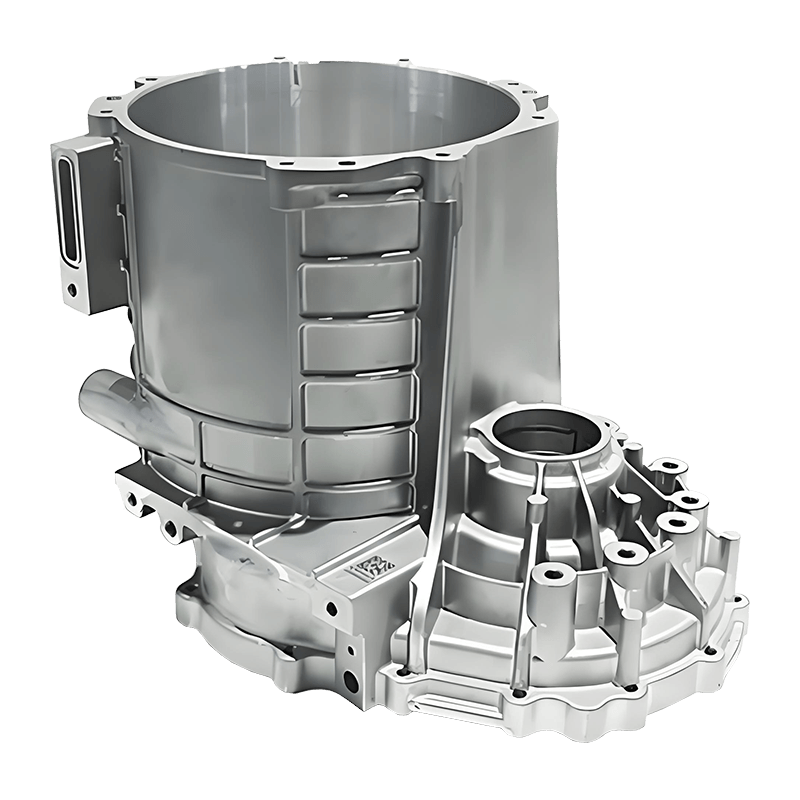
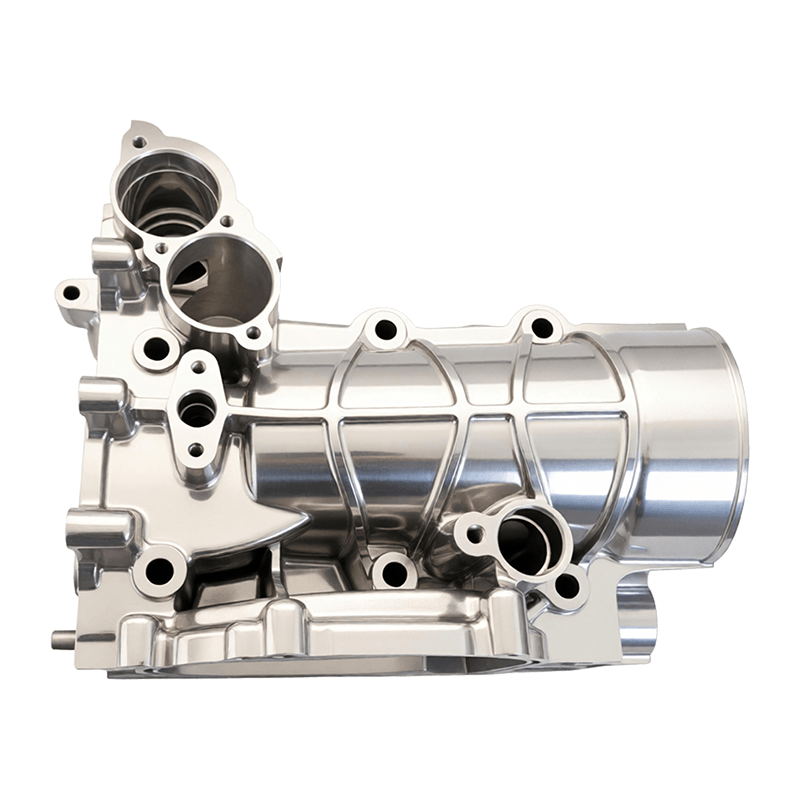
Electric motor housings present a different challenge from battery trays: rather than covering a large flat area, they need round, thin-wall geometry that holds tight concentricity around the stator bore, since even a 0.1mm out-of-round condition can affect air gap consistency between rotor and stator and measurably reduce motor efficiency. Modern motor housings increasingly cast the cooling water jacket directly into the housing wall as a spiral or serpentine channel, eliminating a separate water jacket sleeve that older designs relied on.
Bearing seats and shaft bores in a motor housing are cast slightly undersized and finished by precision machining afterward, since die casting alone typically cannot hold the sub-0.02mm roundness tolerance these features require — a detail that shapes how the part's machining allowance and fixturing are planned from the earliest design stage.
The term used across the industry for consolidating an entire underbody section into one or two castings is giga-casting, named for the scale of the die casting machines required — commonly rated between 6,000 and 9,000 tons of clamping force, compared with 1,600 to 3,000 tons for a typical motor housing or smaller structural part.
Design consolidation: dozens of stamped brackets and panels merged into one casting geometry
Mold engineering: multi-cavity tool design with vacuum, thermal control, and flow simulation
High-tonnage casting: 6,000–9,000 ton machine fills the mold in under 100 milliseconds
Heat treatment and CNC finishing of mounting faces, bores, and sealing surfaces
A part this size is only feasible with a heat-treatment-free, high-ductility aluminum alloy, because a casting of that scale cannot be economically solution-treated and quenched without unacceptable warping — this is the main reason specialized non-heat-treatable die casting alloys have become closely associated with giga-casting programs, rather than the general-purpose alloys used for smaller components.
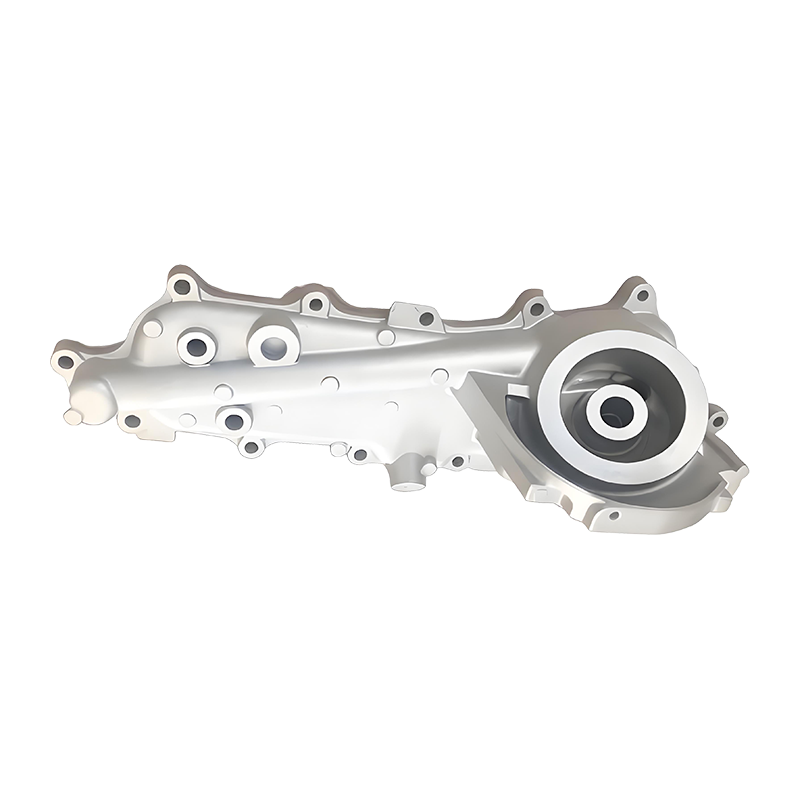
Not every new energy part uses the same aluminum alloy, and the choice affects both the casting process and the part's mechanical behavior in service — alloy selection is one of the areas where die casting new energy parts differs most from general-purpose automotive die casting.
| Part Type | Typical Alloy Class | Priority Property |
| Large structural / giga-casting | High-ductility, non-heat-treatable Al-Si-Mg | Elongation >10% for crash energy absorption |
| Battery tray | Corrosion-resistant Al-Si with low iron content | Leak-tightness, corrosion resistance |
| Motor housing | Heat-treatable Al-Si-Cu or Al-Si-Mg | Thermal conductivity, dimensional stability |
| Small brackets / covers | Standard general-purpose die casting alloy | Cost efficiency, castability |
Elongation is the property that most separates new energy structural alloys from older automotive die casting formulations. A conventional die casting alloy typically offers 1 to 3 percent elongation before fracture, which is adequate for a rigid bracket but unsuitable for a crash-absorbing structural member. Newer high-ductility alloys developed specifically for structural castings can reach 8 to 14 percent elongation, allowing the part to deform and absorb impact energy rather than shattering under crash loading.
Porosity — small trapped gas or shrinkage voids inside the casting — is the defect that most directly threatens the two things new energy parts care about most: leak-tightness and structural strength under load. Conventional high-pressure die casting traps air in the mold cavity as molten metal fills it at high speed, and that trapped air becomes porosity once the metal solidifies.
Vacuum-assisted die casting evacuates air from the mold cavity immediately before injection, cutting trapped-gas porosity to a fraction of conventional levels. This is what allows a vacuum-cast part to be heat-treated afterward without blistering — a step that would otherwise cause trapped gas pockets to expand and rupture the part's surface — and it is why nearly every battery tray and structural casting on the market today specifies vacuum assistance as a baseline requirement rather than an optional upgrade.
Because a battery tray forms part of the pack's environmental seal, its mating flange flatness tolerance is typically held to within 0.15 to 0.3mm across a surface that can span more than a meter in length — a far tighter requirement than a purely structural bracket would need. Achieving this consistently across a production run depends as much on mold thermal balance as on the casting alloy itself, since uneven cooling across a large flat casting is the most common cause of warpage that pushes a part out of flatness tolerance after it's ejected from the mold.
A mold for a large structural giga-casting can cost several million dollars and take 8 to 14 months to design, machine, and validate — an investment that only makes economic sense against a production volume that will amortize it. As a rough guideline, structural die casting tooling tends to become cost-competitive against a multi-part stamped-and-welded assembly once annual production exceeds roughly 30,000 to 50,000 units of that specific part, since below that volume the amortized tooling cost per part outweighs the savings from reduced assembly labor and material.
Die casting produces a single, integrated part where stamping and welding would require dozens of separate pieces joined together, cutting part count, assembly time, and the extra material weight needed to reinforce welded joints, while also improving dimensional consistency across the structure.
A battery tray has to meet a sealing standard against moisture and dust while also integrating cooling channels within thin internal walls, both of which demand tighter porosity control than a purely structural casting, which is why vacuum-assisted die casting is standard for this component.
Large single-piece underbody castings, commonly referred to as giga-castings, typically require die casting machines rated between 6,000 and 9,000 tons of clamping force, compared with 1,600 to 3,000 tons for a motor housing or smaller structural component.
Large structural castings need high elongation to absorb crash energy without fracturing, and they are typically too large to heat-treat without warping, so they use specialized non-heat-treatable, high-ductility alloys rather than the general-purpose alloys suited to smaller heat-treated components.
As a general guideline, structural die casting tooling tends to become cost-competitive against a stamped-and-welded assembly once annual production of that specific part exceeds roughly 30,000 to 50,000 units, since the tooling investment needs sufficient volume to amortize against the assembly savings it delivers.

Die casting is a manufacturing process that forces molten metal under high pressure into a reusable steel mold to pro...
READ MOREMaterials & Manufacturing Yes, Aluminum Die Casting Parts are consistently lighter than Cast Iron Parts when engin...
READ MORE1 Introduction The commercial application of aluminum alloy die castings can be traced back to 1915. After a century of ...
READ MOREThe casting simulation process has become an integral part of the fast-paced development process. In this case, the dev...
READ MORE

Sun Yuejun: +86-13806631860
Wang Shiyong: +86-15958891460 / 15058297768
Dove Yao: +86-18625086675


Copyright © Ningbo Dinghong Mould Co., Ltd. Rights Reserved. Custom Precision Die Casting Aluminum Alloy Parts Manufacturers
