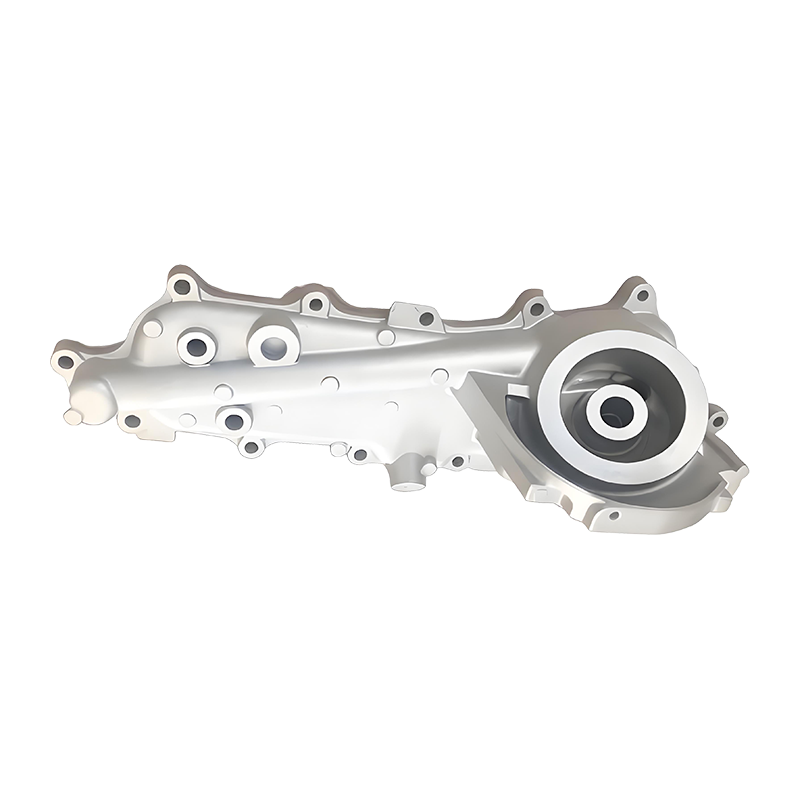
Ningbo Dinghong Mould Co., Ltd. is a China-based Die Casting Pump And Valve Parts manufacturer supplying custom aluminum alloy housings, bodies, covers and connection components for pump, valve and fluid-handling assemblies. Our work covers mold design, die casting, precision finishing and inspection under one roof, so a pump or valve part moves from 3D data to a production-ready casting without changing suppliers.
The range serves automotive thermal management, water pumps, hydraulic and pneumatic valve bodies, household appliance fluid circuits, and industrial equipment where pressure tightness, bore accuracy and surface quality determine whether the assembly seals and lasts.
What We Manufacture in This Category
Our pump and valve die casting program is built around aluminum alloy components that combine a pressure boundary with mounting, sealing and flow features. Typical parts include pump housings and end covers, valve bodies and bonnets, impeller chambers, connection blocks, and bearing or seal seats that must hold position after machining.
Because these parts sit inside a fluid circuit, we treat wall integrity, porosity control and machined-face flatness as the defining requirements rather than secondary details. Mold flow analysis is run before tooling is cut, so filling, cooling and shrinkage behavior are reviewed while the design can still be changed.
Product Range and Application Fit
Pump and valve parts rarely exist alone. They are usually part of a larger assembly, and the same tooling, machining and inspection system supports the surrounding families we produce.
| Part Family |
Typical Function |
Critical Characteristics |
| Pump housings and covers |
Contain the impeller or rotor, form the pressure chamber |
Wall soundness, bore concentricity, seal-face flatness |
| Valve bodies and bonnets |
Direct and shut off flow, carry the actuator interface |
Port position, thread quality, internal passage cleanliness |
| Connection and adapter blocks |
Join lines, manifolds and hose or pipe ends |
Dimensional repeatability, sealing-face finish |
| Bearing and seal seats |
Locate rotating or sealing elements |
Roundness, surface roughness, wear resistance |
Where a pump or valve part shares a platform with other castings, the same engineering and production system applies across our Die Casting Parts range, including Die Casting Fuel Automotive Parts and Die Casting New Energy Parts.
Materials and Casting Considerations
Pump and valve castings are normally produced in aluminum alloy selected for castability, pressure tightness and corrosion behavior in the working fluid. The alloy choice interacts directly with wall thickness, draft, corner radii and the position of machined sealing faces.
- Pressure boundary design: uniform wall sections and generous radii reduce shrinkage porosity in areas that must hold fluid.
- Machining allowance: sealing faces, bores and threads need defined stock so final dimensions are reached without breaking into porosity.
- Draft and ejection: deep bores and internal passages require draft and gate placement that fill cleanly and release without distortion.
- Insert and thread strategy: where threads or wear surfaces are required, we agree on cast-in features versus post-machining during technical review.
Specifications We Confirm Before Tooling
The specification set for a pump or valve casting is agreed before mold design is released. These are the parameters that drive tooling layout, machine selection and the inspection plan.
- Material and temper: alloy grade, condition and any heat treatment or impregnation requirement.
- Dimensional and geometric tolerances: bore diameters, center distances, flatness, perpendicularity and coaxiality on sealing and bearing features.
- Surface requirements: machined-face roughness, sealing-surface finish and cosmetic acceptance for visible faces.
- Pressure and leak acceptance: test medium, test pressure, hold time and the acceptance criterion applied to the finished part.
- Cleaning and internal cleanliness: removal of flash, burrs and internal debris before assembly.
Mold Design, Simulation and Manufacturing Flow
Our engineering team works in CAD/CAE/CAM and uses mold flow analysis to review filling, cooling and stress distribution before the tool is cut. This visual analysis stage lets us correct gate position, runner balance and cooling layout while changes are still inexpensive.
The manufacturing route follows a controlled sequence: design data release, six-face machining, hole machining, NC rough machining with pre-heat-treatment check, heat treatment, part manufacturing with CMM check, NC finish machining, wire cutting, EDM, polishing, final check and assembly. Each stage carries its own inspection gate.
Production Capacity and Finishing
Our facility operates high-precision CNC machining centers, large-scale EDM equipment, full-tonnage die-casting machines and automated trimming lines. That combination supports both the tooling and the volume casting of pump and valve components, including the secondary machining that turns a raw casting into an assembly-ready part.
Finishing operations cover face and bore machining, drilling and tapping, deburring and surface preparation. Where a part requires leak testing or additional cleaning before packing, the process is defined in the quality plan rather than added after the fact.
Quality Control and Acceptance
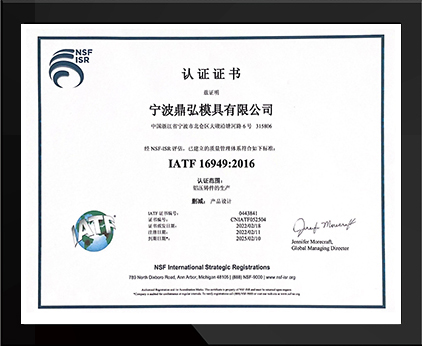
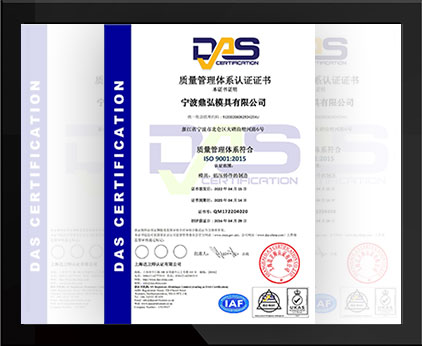
Dinghong has held ISO 9001 and IATF 16949 quality management system certification since 2017, with inspection structured across incoming, in-process and outgoing stages. Inspection equipment includes CMM, X-ray flaw detection and spectrometer analysis, and results are recorded per batch.
- Incoming: raw material verification with dimensional inspection and metallographic analysis.
- In-process: control points on standard and outsourced parts, plus assembly checks.
- Trial and first article: sample wall thickness and full-dimension check on the trial casting.
- Pre-delivery: final check against the agreed drawing and inspection plan before shipment.
Information We Use to Configure Your Solution
A pump or valve casting proposal is only as good as the input data behind it. We prepare the configuration and quotation from the following project information.
| Input |
What It Determines |
| 3D model and 2D drawing with tolerances |
Mold layout, parting line, machining stock and inspection plan |
| Alloy grade and condition |
Casting parameters, heat treatment and finishing route |
| Annual volume and release pattern |
Cavitation, machine tonnage and tooling durability strategy |
| Working pressure and fluid |
Wall integrity targets, leak-test method and acceptance level |
| Assembly interface and mating parts |
Sealing-face finish, thread class and fit strategy |
| Packing, marking and delivery scope |
Protection method, traceability marking and shipment preparation |
Project Support, Documentation and Serviceability
We provide one-stop service from part design and tool development through tool building and parts production. Project management, remote technical support by video conference and digital data sharing are standard, with on-site engineering support for major projects when required.
Tooling documentation, inspection records and process data are handed over as part of the project scope. For maintenance, we support spare-part planning and tooling repair so a pump or valve program keeps running after the first production release.
Frequently Asked Questions
Which pump and valve parts can you die cast?
We produce aluminum alloy pump housings, end covers, valve bodies, bonnets, adapter blocks and seal or bearing seats, along with the secondary machining needed to make them assembly-ready.
How do you control porosity in pressure-tight castings?
Mold flow analysis is used before tooling release to review filling, cooling and shrinkage, and X-ray flaw detection is available to verify internal soundness on critical areas.
Can you supply both the mold and the production castings?
Yes. Our process covers mold design, manufacturing, die casting, precision finishing and inspection, so tooling and serial production come from the same controlled flow.
What quality evidence accompanies a pump or valve part order?
Inspection is recorded per batch across incoming, in-process and outgoing stages, with CMM, X-ray and spectrometer results available according to the agreed quality plan.
What do you need to quote a pump or valve casting project?
Send the 3D model and 2D drawing with tolerances, alloy grade, annual volume, working pressure and fluid, assembly interface details, and packing or marking requirements.


 English
 Español
 русский
 Français