Ningbo Dinghong Mould Co., Ltd. is a Die Casting Electrical Parts Manufacturer working from Beilun, Ningbo, with tooling roots going back to Yuejin Mould in 1998. We design the mould, cast the aluminium, machine and finish the part, and ship it from a facility next to Beilun Port.
This range covers the aluminium components that sit inside and around electrical and electronic equipment: housings, covers, trays, handles, brackets and heat-dissipating bodies. Parts are produced to drawing, with the tooling, machining and inspection handled under one roof.
What We Supply in This Range
Electrical die casting is a fit-driven family rather than a single part. The common thread is a thin-to-medium wall aluminium body that must hold a PCB, a heating element, a connector interface or a cable entry while managing heat, weight and dimensional consistency.
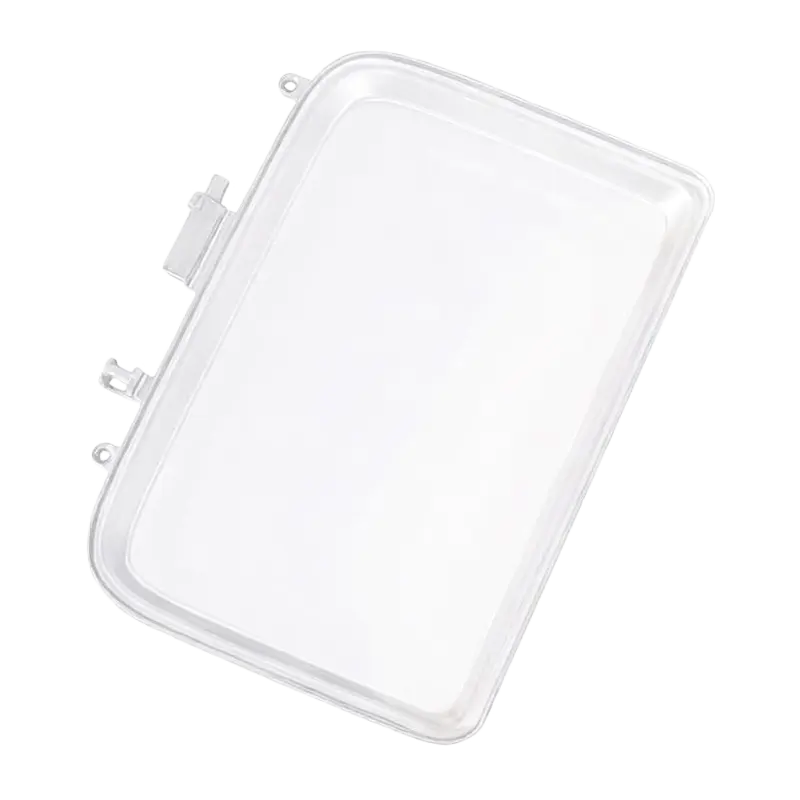
Die Casting Baking Tray
Flat, ribbed aluminium trays used in ovens and baking appliances. Wall thickness, flatness and food-contact surface finish drive the tooling design.
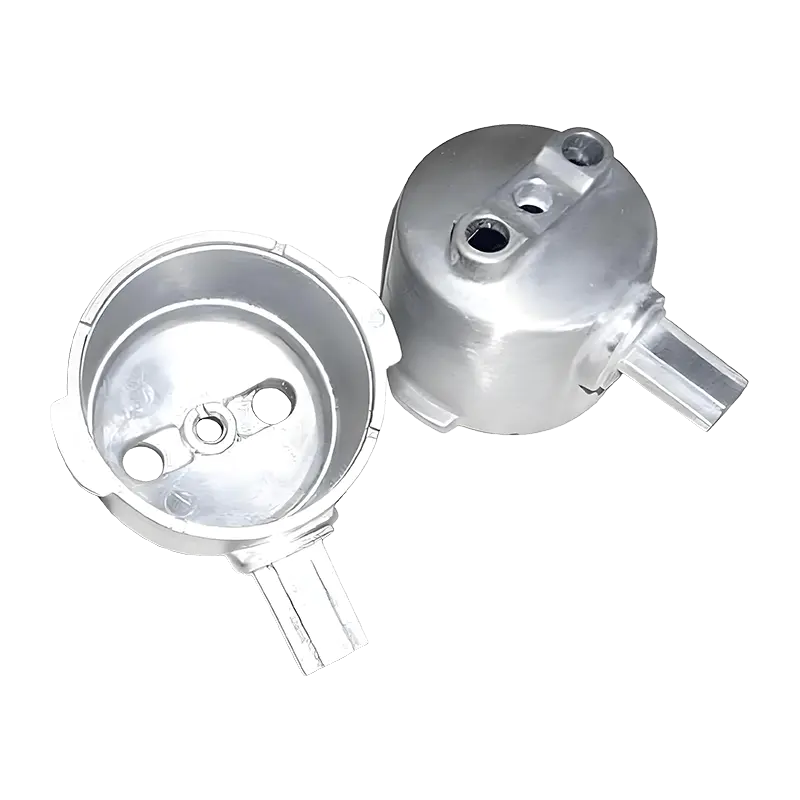
Die Casting Coffee Machine Filter Handle
Handles and filter bodies for espresso and filter machines, where thread accuracy, sealing faces and a clean exterior surface matter as much as strength.
Housings, Covers and Brackets
Enclosures and mounting bodies for controllers, inverters, inductance boxes and similar electrical assemblies, cast with bosses, ribs and machined interfaces.
Where These Parts Fit
Electrical castings usually sit at the boundary between a power or signal function and the outside environment. That shapes the specification more than the part's size does.
- Appliance and consumer equipment — baking trays, coffee machine handles, motor and heater housings where appearance and repeatability are visible to the end user.
- Power electronics — controller, inverter and converter housings that need flat mounting faces, sealed joints and heat paths into the casting.
- Telecommunication equipment — enclosures and heat-dissipating bodies with tight boss positions and connector cut-outs.
- Energy storage and charging — plates, frames and housings that combine structural stiffness with electrical insulation requirements.
- Automotive electrical and three-electric assemblies — housings and covers produced under IATF 16949 discipline.
Where a part is primarily load-bearing rather than electrical, it usually belongs in Die Casting Structural Parts. Where it is a motor, reducer or controller housing for a new energy drivetrain, Die Casting New Energy Vehicle Three-Electric Parts is the closer match.
Material and Specification Decisions
Most electrical parts we cast are aluminium alloy, chosen for the balance of weight, thermal conductivity and castability. The alloy grade, temper and any post-casting treatment are agreed against the drawing and the working environment before tooling starts.
| Specification Area |
What We Confirm With You |
Why It Matters |
| Alloy and temper |
Grade, thermal conductivity target, as-cast or heat-treated condition |
Drives strength, heat dissipation and machining behaviour |
| Wall thickness and ribs |
Nominal wall, rib layout, draft and corner radii |
Controls fill, porosity risk and cycle time |
| Machined interfaces |
Bearing seats, sealing faces, threads, connector cut-outs |
Determines fit with mating electrical components |
| Surface and sealing |
As-cast, blasted, painted, anodised or machined finish; gasket faces |
Affects ingress protection and appearance |
| Inspection level |
Critical dimensions, CMM reports, X-ray or spectrometer checks |
Defines the acceptance evidence for each batch |
Tooling and Process Control
We build the mould ourselves. Our design team uses CAD/CAE/CAM software and mould flow analysis to simulate filling, cooling and stress distribution before cutting steel, so the fill pattern and gate position are reviewed on screen rather than on the machine.
- Design review and client confirmation before manufacturing release
- NC rough machining, heat treatment, then NC fine machining with CMM checks at each stage
- Wire cutting, EDM and polishing, followed by assembly and trial
- Mould trial with sample wall-thickness and full-dimension checks before delivery
Production runs on high-precision CNC machining centres, large-scale EDM equipment, full-tonnage die-casting machines and automated trimming lines. That combination lets us hold machined features on cast bodies without moving the part between suppliers.
Quality Assurance and Acceptance
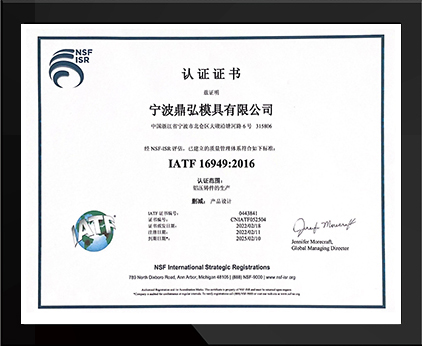
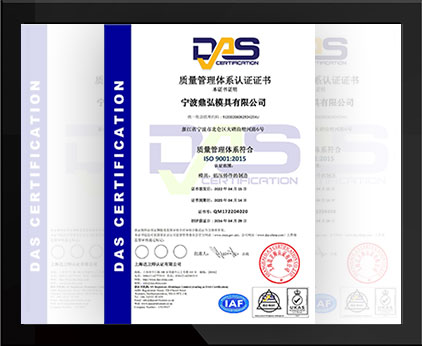
Dinghong Mould has held ISO 9001 and IATF 16949 certification since 2017. Our quality system covers incoming material, in-process and outgoing inspection, with data recorded for each batch.
- Raw material dimension inspection and metallographic analysis
- CMM dimensional verification on machined features
- X-ray flaw detection for internal porosity on critical sections
- Spectrometer checks to confirm alloy composition
- Sample wall thickness and full-dimension report at mould trial
Acceptance criteria are agreed at the quotation stage, so the inspection report you receive matches the drawing you issued. Where a part carries a safety or sealing function, we discuss the sampling plan and any third-party inspection requirement before production.
Information We Use to Configure Your Solution
A workable proposal needs the working point, not just a shape. The following inputs let us select the machine, the tooling concept and the finishing route.
- 3D model and 2D drawing with tolerances, datum scheme and critical dimensions marked
- Material or alloy preference, and any thermal or electrical conductivity target
- Annual volume, batch size and expected production ramp
- Machined features, threads and sealing faces, plus mating component details
- Surface treatment, colour and appearance requirements
- Inspection and documentation expectations, including any PPAP-style submission
- Packing, labelling and delivery destination
Project Support, Documentation and Delivery
We handle the chain from part design through tool development, tool building and parts production. A project team is assigned at launch, and design changes are confirmed with you before release.
- Remote technical support by video conference and digital data sharing
- On-site engineering support for major projects when required
- Mould and part documentation issued with the shipment
- Spare parts and serviceability discussed at handover, with mould maintenance guidance
Our marketing network covers China, South America and Southeast Asia, with the European market under active development. Shipments move through Beilun Port, which keeps export logistics straightforward for overseas projects.
Related ranges include Die Casting Telecommunication Equipment Parts and Die Casting Photovoltaic, Energy Storage and Charging Parts, both of which share tooling and inspection practice with this family.
Frequently Asked Questions
Can you cast and machine an electrical housing from our 3D model only?
Yes. We work from a 3D model plus a 2D drawing that carries tolerances and datum information. If the drawing is not finalised, our design team reviews the model and returns a proposal covering parting line, gate position, draft and machined features before tooling is released.
How do you control porosity in thin-wall electrical parts?
Mould flow analysis is used during design to check fill and cooling behaviour, and gate and overflow positions are set accordingly. During production, X-ray flaw detection is available on critical sections, and process parameters are recorded so a proven setting can be repeated.
What surface finishes can be applied to aluminium electrical castings?
As-cast, blasted, painted, anodised and fully machined finishes are all used in this range. The choice is agreed against the appearance requirement, the sealing interface and any electrical insulation need, and is written into the inspection plan.
Do you supply the mould separately from the cast parts?
We can. Some customers take the tool and run production elsewhere; others have us cast, machine and finish the parts. Both routes are supported from the same design and manufacturing process, and the mould is inspected before delivery either way.
What documentation accompanies a production batch?
Batch inspection records are kept for incoming material, in-process checks and outgoing inspection, including CMM dimensional results and spectrometer alloy confirmation where applicable. The specific report package is agreed with you at the quotation stage.
How is a new electrical part project started?
Send the drawing, target volume and application details. We review the part, confirm the alloy and process route, and return a tooling and production proposal. Once the design is approved, the project team is assigned and the mould enters manufacturing.


 English
 Español
 русский
 Français