Ningbo Dinghong Mould Co., Ltd. is a China-based Die Casting Photovoltaic, Energy Storage And Charging Parts Manufacturer serving global B2B buyers. We integrate mold design, die casting, precision finishing and export in one facility, producing aluminum alloy housings, plates and boxes for PV inverters, battery energy storage cabinets and EV charging equipment.
What We Supply in This Category
As a Die Casting Photovoltaic,Energy Storage And Charging Parts Manufacturer, we match product configuration to the application, operating limits, interfaces and acceptance criteria defined for each project.
Our photovoltaic, energy storage and charging parts family covers the structural and thermal-management castings that sit inside power conversion and battery equipment. Each part is developed from the customer's 3D data, with mold flow analysis used before steel is cut to confirm filling, cooling and shrinkage behavior.
The range is built around three product types that we produce as standard configurations and adapt to project requirements:
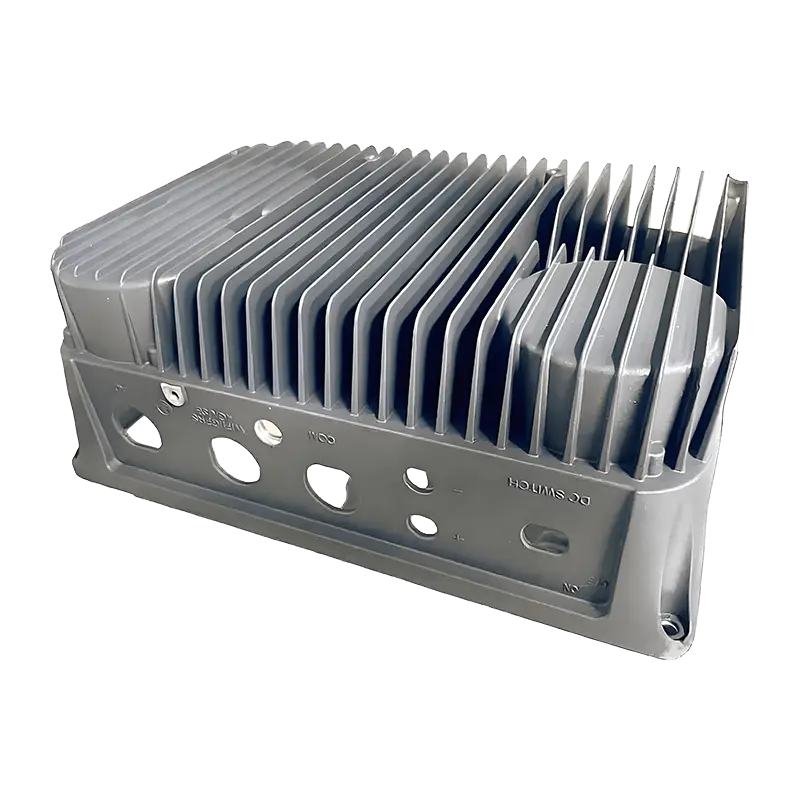
Die Casting Photovoltaic Inverter Housing
Enclosure bodies for string and central inverters, cast with integrated cooling fins, mounting bosses and sealed cable entries.
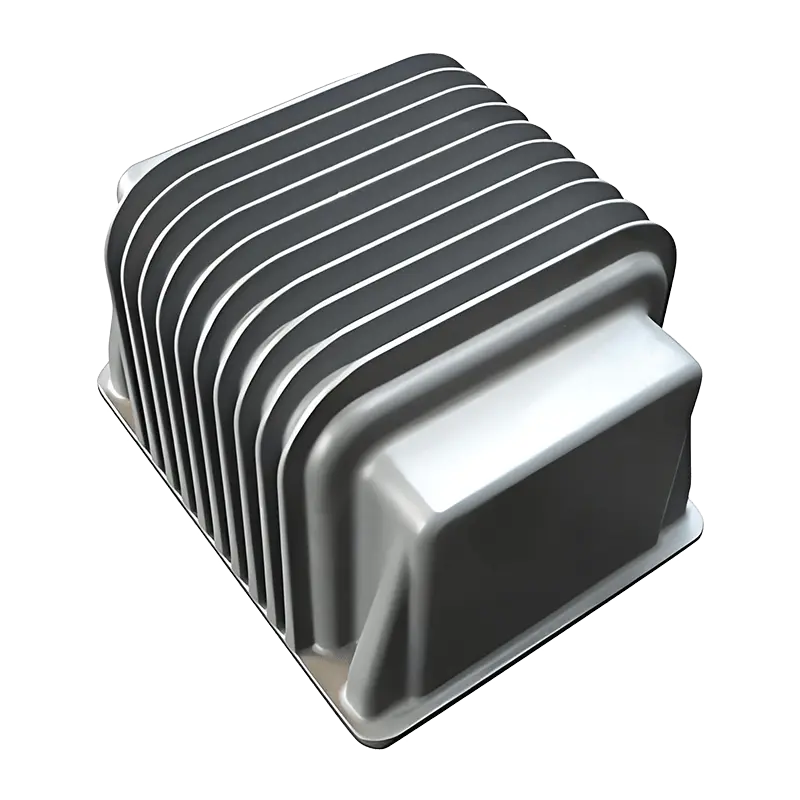
Die Casting Inductance Box
Magnetic-component and filter enclosures for charging modules and power stages, with wall thickness controlled for shielding and heat paths.
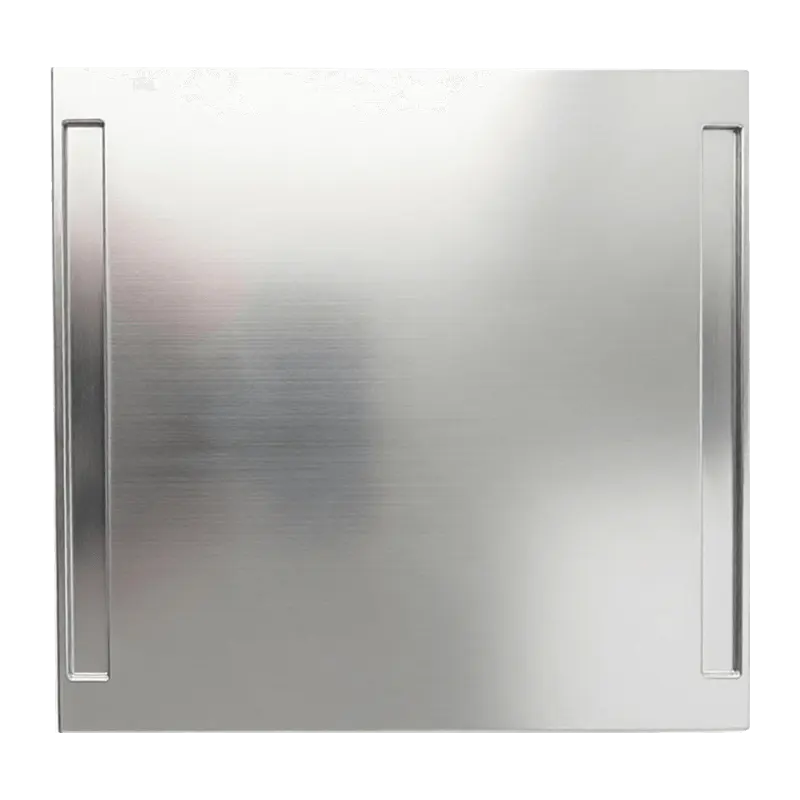
Die Casting Energy Storage Plate
Flat structural and cold-plate type components for battery racks and PCS units, where flatness and rib stiffness drive the design.
Application Fit Across PV, Storage and Charging
These castings operate in outdoor cabinets, rooftop arrays, containerized storage and charging stations, so the design brief usually combines mechanical load, sealing, corrosion exposure and heat dissipation. We match material and process route to that combination rather than applying one default specification.
- Photovoltaic: inverter and combiner housings, heat-sink integrated bodies, mounting brackets exposed to UV and rain.
- Energy storage: battery module end plates, rack structural plates, PCS enclosures and liquid-cooling cold plates.
- Charging: AC/DC charger housings, inductance and filter boxes, connector support castings and cable-management brackets.
Where a project also needs adjacent structural or new-energy castings, our Die Casting Structural Parts and Die Casting New Energy Parts ranges share the same tooling, casting and inspection flow.
Materials and Critical Specifications
Aluminum alloy selection is driven by strength, thermal conductivity and castability. We confirm the alloy grade and heat-treatment condition against the mechanical and thermal duty of the part before releasing the mold design.
| Specification Area |
What We Confirm With You |
Typical Project Input |
| Alloy and temper |
Grade, heat treatment, conductivity target |
ADC12, A380, AlSi10MnMg class alloys |
| Wall thickness |
Minimum and nominal wall, rib ratios |
2.5–5 mm nominal, thicker at bosses |
| Dimensional accuracy |
Datum scheme, GD&T, machining allowance |
Critical bores and sealing faces machined |
| Sealing and flatness |
Gasket or O-ring interface, leak test method |
IP-rated enclosure requirements |
| Surface finish |
As-cast, machined, passivation or coating |
Powder coat, anodize, chromate |
Tooling, Casting and Finishing Under One Roof
Dinghong Mould was established in 2013, building on Yuejin Mould's experience since 1998. Our Beilun facility integrates mold design, manufacturing, die casting, finishing and trade, supported by high-precision CNC machining centers, large-scale EDM equipment, full-tonnage die-casting machines and automated trimming lines.
Mold flow analysis is applied during the design phase to simulate filling, cooling and stress distribution, so potential defects are addressed before the first trial shot. This shortens development cycles and reduces trial-and-error cost on the customer side.
For parts that require post-cast machining, we machine sealing faces, bearing bores and threaded features in-house, then route the part through inspection before packing.
Quality Control and Acceptance
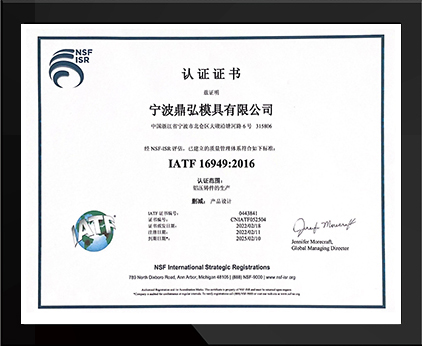
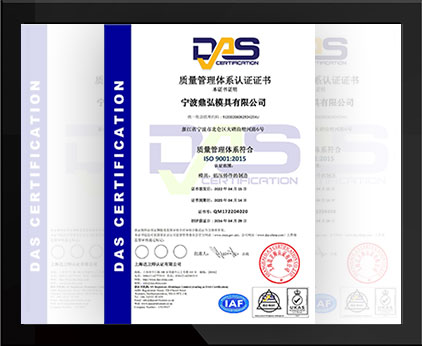
We have held ISO 9001 and IATF 16949 certification since 2017, with an incoming, in-process and outgoing inspection system. Inspection equipment includes CMM, X-ray flaw detection and spectrometry, and results are recorded per batch.
- Raw material verification and metallographic analysis before casting.
- In-process checks on critical dimensions and wall thickness.
- X-ray inspection for internal porosity on structural and sealing parts.
- Full-dimension sample check on trial shots and pre-delivery check on production lots.
Acceptance criteria, sampling plans and inspection reports are agreed during the project kickoff so that the first article and subsequent lots are measured against the same standard.
Configuration Options and Integration Support
We configure each part around the mechanical interface, the thermal path and the assembly sequence of the customer's equipment. Options that we routinely discuss include:
- Integrated cooling fins, cooling channels or cold-plate inserts.
- Machined sealing grooves, gasket faces and threaded inserts.
- Cast-in or post-machined mounting bosses, grounding points and cable entries.
- Surface treatment selection for outdoor UV, salt-spray and humidity exposure.
- Marking, traceability and packaging configuration for line-side delivery.
Our engineering team works from the customer's 3D model and 2D drawing, and can also support part design where the concept is not yet finalized. Tool development, tool building and parts production are handled as one continuous service.
Information We Use to Configure Your Solution
To prepare a reliable mold design and quotation, we work from the following project inputs. Where a value is not yet fixed, we agree on the assumption and record it in the proposal.
| Input |
Why We Need It |
| 3D model and 2D drawing |
Defines geometry, datums, tolerances and machining allowance |
| Alloy and heat treatment |
Sets mechanical and thermal performance |
| Annual volume and batch size |
Drives mold cavitation and machine selection |
| Surface treatment and color |
Determines finishing route and masking |
| Inspection and acceptance criteria |
Aligns first article and lot inspection |
| Packaging and delivery destination |
Defines packing method and shipping route |
Maintenance, Spare Parts and Serviceability
Molds are built with replaceable inserts and standard components where the part geometry allows, so wear-prone areas can be serviced without remaking the whole tool. We keep mold records, including design revisions and inspection data, to support future maintenance and repeat orders.
For production parts, we can supply replacement castings from the same tooling and maintain the agreed inspection routine across repeat batches.
Frequently Asked Questions
Which alloys do you use for PV and energy storage castings?
We work with common die-casting aluminum alloys such as ADC12 and A380, and with higher-strength grades where the structural or thermal duty requires them. The final grade and heat treatment are confirmed against the mechanical and conductivity targets of the part.
Can you cast and machine a housing with integrated cooling fins?
Yes. Fins, cooling channels and cold-plate features are designed into the casting and reviewed through mold flow analysis to confirm filling and cooling before the tool is cut. Machined sealing faces and bores are completed in-house after casting.
How do you control porosity in sealing and structural parts?
We control the process through mold design, gating and cooling layout, and verify internal quality with X-ray inspection on the agreed sampling plan. Critical sealing faces are machined and checked against the drawing.
What information do you need to quote a new part?
A 3D model and 2D drawing, alloy and heat treatment, annual volume and batch size, surface treatment, inspection criteria, and packaging and delivery destination. If some values are not yet fixed, we agree on assumptions and state them in the proposal.
Do you support both tooling and series production?
Yes. We provide part design support, tool development, tool building and parts production as one service, so the same team carries the project from mold design through die casting, finishing and inspection.
How are parts packed and shipped?
Packing is configured to the part geometry and the customer's line-side or warehouse requirements. Our facility is located near Beilun Port in Ningbo, which supports efficient export logistics to China, South America, Southeast Asia and other markets.


 English
 Español
 русский
 Français