
 English
 Español
 русский
 Français

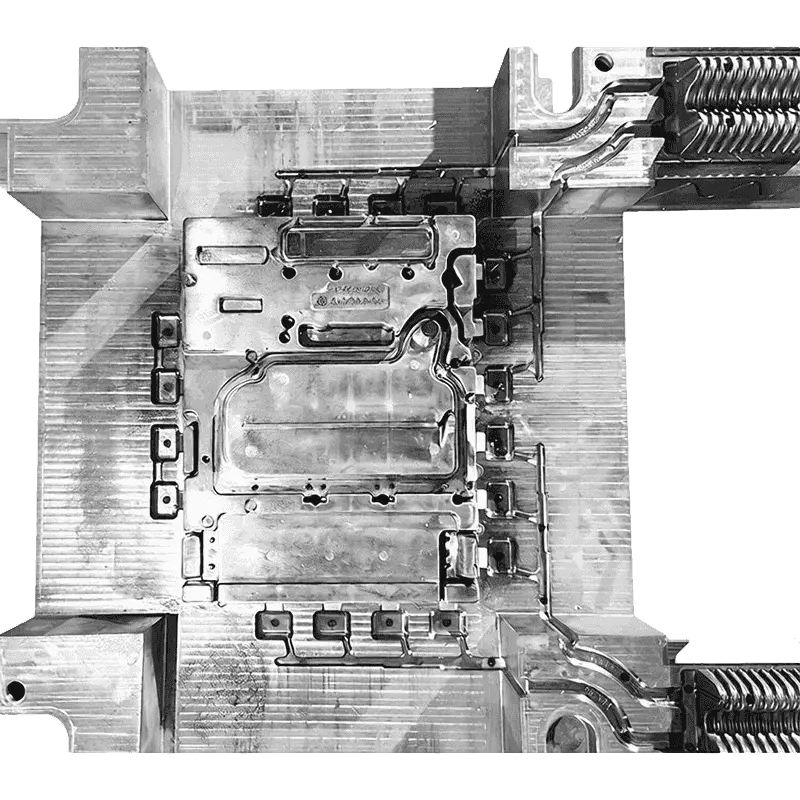
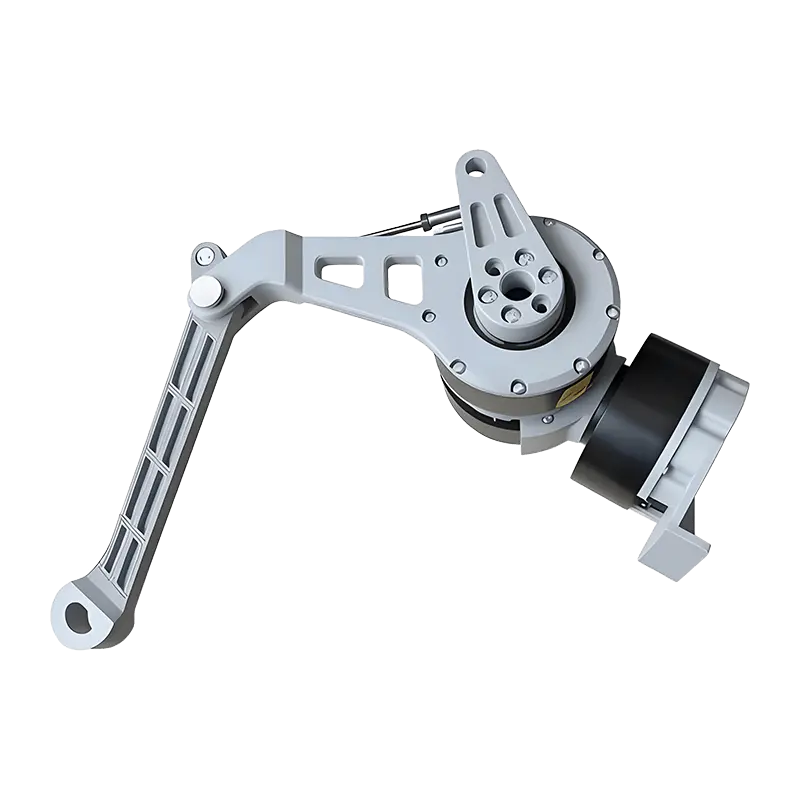


Die casting automotive parts are made by forcing molten metal into a steel mold under high pressure, where it fills t...
READ MORE
Content
Two quotations for the same aluminum controller housing can differ by 20% or more, even when both suppliers list the same alloy and the same annual volume. The gap usually sits in the details: how the die is designed, how the shot profile is controlled, how much machining is left on the casting, how scrap and rework are handled, and how much inspection is built into the process. Die casting manufacturing is not a single machine operation. It is an integrated production system in which tooling, metal chemistry, process stability, finishing, and validation determine the real piece price and the real risk.
The practical conclusion is straightforward: evaluate a die casting supplier by the maturity of the whole manufacturing chain, not by the casting rate alone. A low initial quote can become expensive when a weak die causes flash, when porosity appears after machining, when dimensional drift forces rework, or when documentation does not support a production part approval process. The sections below explain how the process works, where cost and quality are created, and what buyers and engineers should verify before awarding a program.
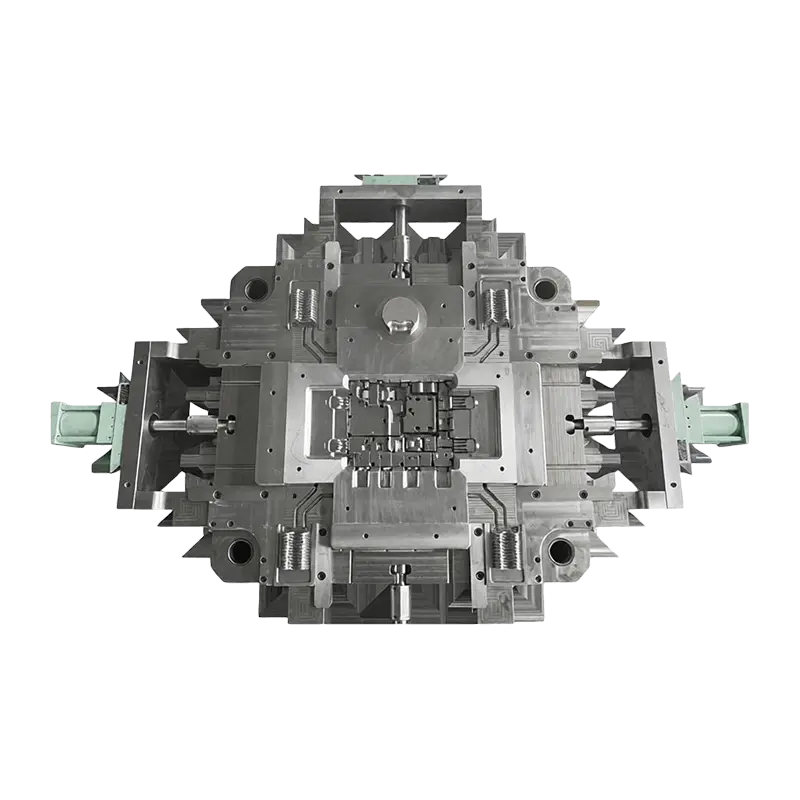
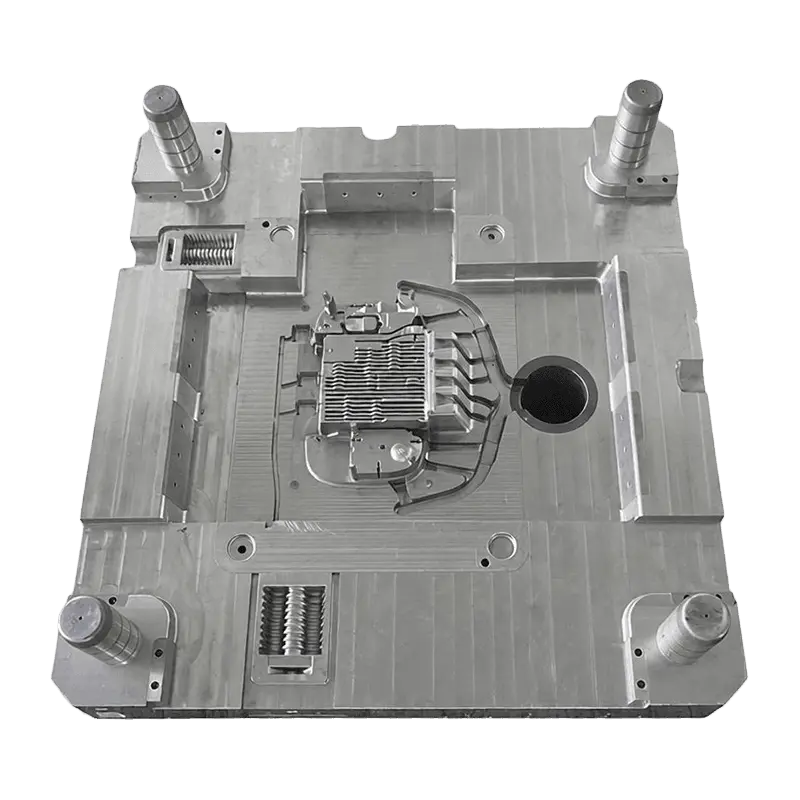
Die casting manufacturing forces molten metal into a reusable steel mold under high pressure. The mold, often called a die, contains the part cavity, runners, overflows, cooling channels, and ejection features. Aluminum is the most common die casting metal for structural, housing, and thermal components, although zinc, magnesium, and copper alloys are also used. The process is valued for thin walls, fine surface detail, dimensional repeatability, and high-volume output.
A production-ready program includes four connected systems. First is the die and its maintenance plan. Second is the alloy and melt treatment. Third is the machine, shot profile, thermal control, and cycle discipline. Fourth is the finishing and validation chain: trimming, machining, leak testing, surface treatment, dimensional inspection, and documentation. Weakness in any one of these areas shows up in the others. A poor gate design can create porosity that only appears after machining. An unstable die temperature can cause dimensional variation that looks like a machining problem. A loose alloy control program can change fluidity, shrinkage, and crack sensitivity from lot to lot.
| Route | Typical metals | Best fit | Main constraints |
|---|---|---|---|
| High-pressure die casting, cold chamber | Aluminum, magnesium, some copper alloys | Thin-wall housings, structural parts, high-volume production | Tooling cost, porosity control, limited heat treatment options |
| High-pressure die casting, hot chamber | Zinc, magnesium, low-melting alloys | Small precision parts, fast cycles | Not suitable for high-melting aluminum |
| Low-pressure die casting | Aluminum | Wheels, larger symmetric parts, lower porosity | Longer cycle, different tooling economics |
| Gravity die casting | Aluminum, zinc | Medium-volume parts, thicker sections | Lower productivity, more manual control |
For aluminum automotive and industrial parts, cold-chamber high-pressure die casting is the dominant route. It supports the wall thickness, cycle time, and volume expected in housing and structural applications. The trade-off is that the process demands strong tooling and disciplined parameter control. Buyers should therefore look beyond the machine tonnage and ask how the supplier manages die design, metal cleanliness, thermal balance, and verification.
The sequence is simple to describe and difficult to control consistently. A typical program moves through the following stages.
The shot is the central event. The plunger moves through the shot sleeve, the metal fills the runner and cavity, and intensification pressure compacts the remaining liquid during solidification. If the gate is too small, the cavity may fill incompletely or turbulence may create gas entrapment. If the gate is too large, the runner may be difficult to trim and the yield may fall. If the overflow is poorly placed, cold metal or gas may remain in a critical surface. If the die temperature is uneven, one area may shrink differently from another and the part may distort after ejection.
Two plants can run the same machine and the same die and still produce different results because melt quality changes fluidity and defect risk. Chemistry verification, degassing, filtration, and clean transfer practices matter. Hydrogen pickup and oxide inclusions can create porosity or weak sections. In aluminum die casting, iron, silicon, copper, and other elements are not incidental; they influence strength, ductility, thermal conductivity, machining behavior, and crack sensitivity. A supplier that treats metal as a controlled input, not as a commodity, is usually better equipped to hold a stable process.
The die is the most important manufacturing decision in the program. It defines how metal enters the cavity, where gas and cold metal collect, how heat leaves the steel, how the part ejects, and how long the tool remains productive. A low-cost die can save money at purchase and lose it during production through flash, sticking, excessive polishing, dimensional drift, and short die life.
A competent die design review should cover part orientation, parting line, gate location, runner and overflow sizing, cooling layout, ejector placement, slide and lifter design, venting, and machining allowance. For thin-wall housings and structural parts, simulation is not a luxury. Filling and solidification analysis helps predict air entrapment, cold shuts, shrinkage porosity, and hot spots before steel is cut. It also gives the toolmaker and the casting engineer a shared basis for decisions instead of relying on trial-and-error after the die is built.
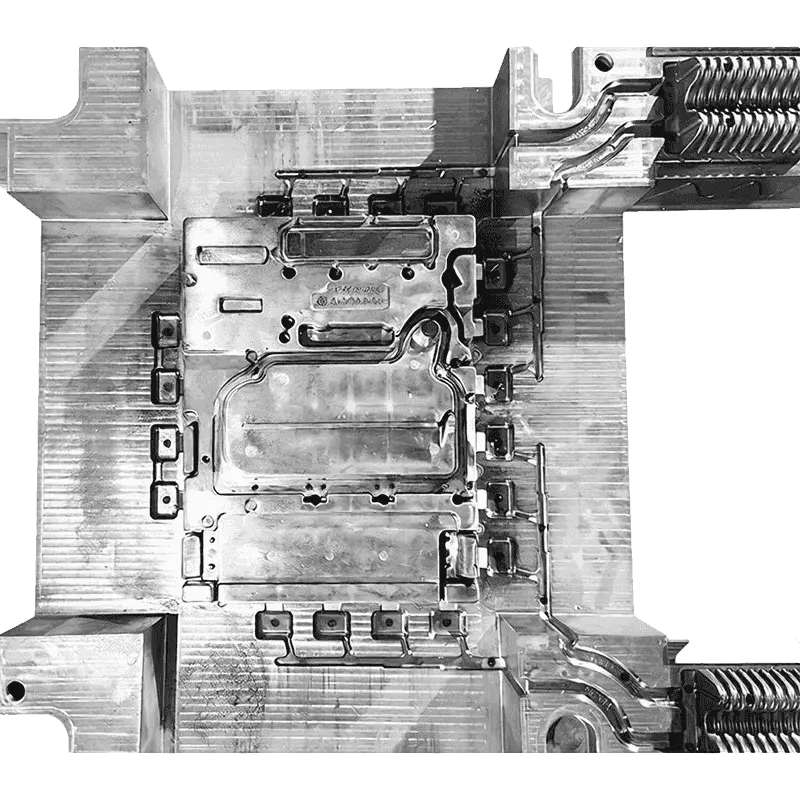 OEM/ODM Die Casting Mold for Automotive Controller HousingsOEM/ODM mold for producing automotive controller housings, suited to design review and simulation-led tooling decisions before die construction.View Product →
Tooling and casting are tightly linked in an integrated supplier. Ningbo Dinghong Mould combines mold design, mold making, die casting, finishing, and trade in one operating chain. That structure shortens the feedback loop between a simulation result, a trial shot, and a production correction. It also makes the supplier more accountable for dimensional issues that originate in the die rather than in the machining department.
Alloy selection starts with the service environment, not with a generic material name. A controller housing may need dimensional stability, thermal conductivity, and good flow in thin walls. A clutch housing may need strength and fatigue resistance. A battery tray or structural beam may need stiffness, crash behavior, and joining compatibility. A telecommunications filter housing may need a combination of thermal performance, plating or coating compatibility, and tight flatness.
Common high-pressure die casting aluminum alloys are based on aluminum-silicon systems. Silicon improves fluidity and reduces shrinkage, which helps thin-wall filling. Copper increases strength but can reduce corrosion resistance and thermal conductivity. Iron affects die soldering and ductility. Magnesium can support strength through precipitation, but heat treatment of high-pressure die castings is limited by gas porosity and blistering risk. The practical result is that alloy choice is a compromise among castability, mechanical properties, corrosion behavior, machining, and cost.
For automotive and industrial programs, the supplier should provide chemistry ranges, mechanical property data, and process limits for the selected alloy. It should also explain how it controls composition over time. A certificate that lists the alloy name is less useful than a control plan that shows how incoming ingot, melt chemistry, and microstructure are verified. Where a part will be machined, the alloy’s machining behavior and inclusion level matter as much as its nominal strength.
Die casting manufacturing depends on a narrow window of process conditions. The shot profile should fill the cavity quickly enough to avoid premature freezing but not so violently that turbulence traps gas. Intensification pressure should be applied while the metal is still liquid enough to be compacted. The die temperature should be balanced and stable. Cycle time should be repeatable, not simply short.
Vacuum assistance can reduce gas porosity in shell-type parts and improve filling in difficult geometries. It is not a substitute for good gating, venting, and die thermal design. High-vacuum die casting is one route to reducing gas porosity in shell products, as discussed in this technical overview of high-vacuum die casting technology in shell products. The practical question for a buyer is whether the supplier controls the whole system: vacuum level, seal condition, vent cleanliness, shot profile, and leak verification.
Useful process controls include shot velocity and pressure curves, intensification pressure, die temperature at multiple points, metal temperature, cycle time, vacuum level, and cooling flow. Statistical process control is more meaningful when it is applied to these parameters than when it is applied only to final dimensions. Dimensional results tell you what happened. Process data tells you why it happened and whether it is likely to happen again.
The casting is not a finished part until the interfaces, sealing surfaces, and cosmetic requirements are met. Trimming removes runners, overflows, and flash. Shot blasting or deburring improves appearance and removes sharp edges. Machining creates bearing bores, sealing grooves, threaded holes, and mounting faces. Leak testing verifies sealing integrity for housings that contain oil, coolant, or air. Impregnation may be used for parts that require pressure tightness. Coating, painting, or conversion coating protects the surface and supports assembly.
Machining allowance is a commercial and technical decision. Too little stock can expose porosity or leave a surface that cannot clean up. Too much stock increases cycle time, tool wear, and material removal cost. A well-designed die casting leaves consistent stock on critical faces and avoids machining areas where the as-cast skin is needed for pressure tightness. Fixture design also matters. A casting that is clamped on a thin wall can distort during machining and measure differently after release.
Secondary operations should be reviewed as part of the manufacturing flow, not as isolated services. A supplier that controls trimming, machining, cleaning, and leak testing under one quality system can trace a leak or dimensional issue back to the casting lot, die condition, or process parameter. That traceability is difficult to maintain when multiple subcontractors handle the part without shared records.
Quality in die casting manufacturing is built through prevention and verified through evidence. The evidence should include material certificates, first article inspection reports, dimensional layouts, capability studies, control plans, failure mode and effects analysis, and inspection records. For automotive programs, production part approval process documentation is typically required. For industrial programs, the same discipline is useful even when the customer’s formal requirements are lighter.
Inspection methods should match the risk. Coordinate measuring machines verify geometric dimensions. X-ray or computed tomography can reveal internal porosity and inclusions. Leak testing confirms sealing performance. Salt spray or humidity testing supports coating decisions. Hardness and tensile testing verify material condition. Visual standards define acceptable surface quality. The strongest suppliers connect these checks to process controls rather than treating them as final gates.
Ningbo Dinghong Mould passed ISO 9001 and IATF 16949 certification in 2017, which indicates that its quality system is structured for automotive supply requirements. Certification alone does not guarantee a capable process, but it provides a framework for documentation, corrective action, calibration, and traceability. A buyer should still audit how the system is used on the shop floor. Are control plans current? Are process parameters recorded? Are nonconforming parts segregated? Can the supplier trace a finished casting back to the die, machine, alloy lot, and operator?
Die casting manufacturing serves industries in which repeatable metal geometry, thin walls, and integrated features create value. The requirements change by application, and the supplier should be able to explain how its process fits the part’s function.
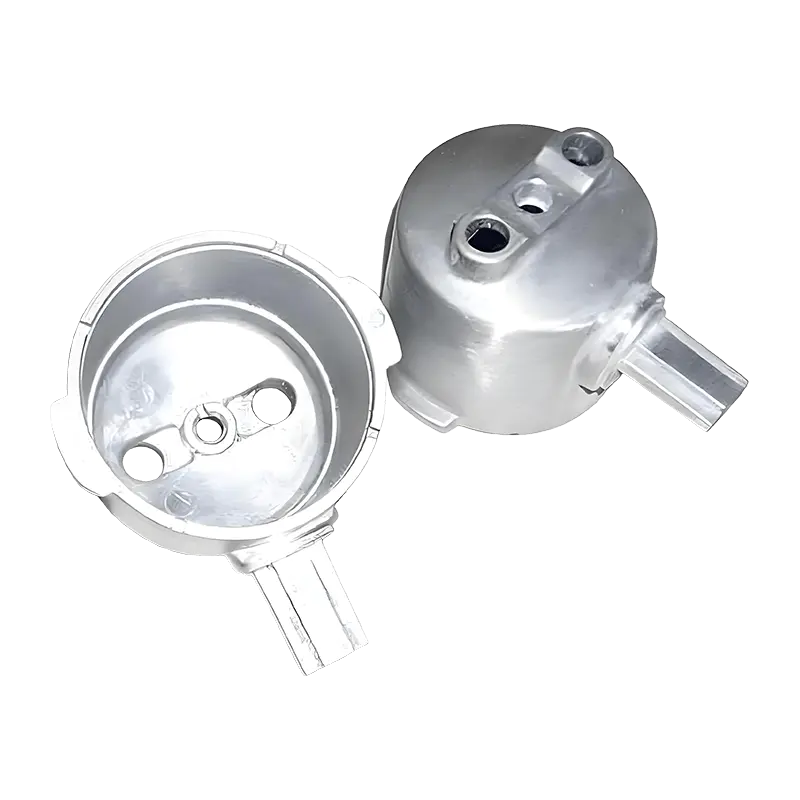
Automotive die casting covers powertrain, transmission, chassis, body structure, and electric drive components. Typical parts include clutch housings, oil pans, filter housings, controller housings, reducer housings, motor housings, electronic control unit castings, battery trays, longitudinal beams, and shock tower components. These parts often combine structural function with sealing, mounting, or thermal requirements. For electric vehicles, the balance shifts toward larger housings, integrated cooling passages, battery enclosure structures, and lightweight structural castings.
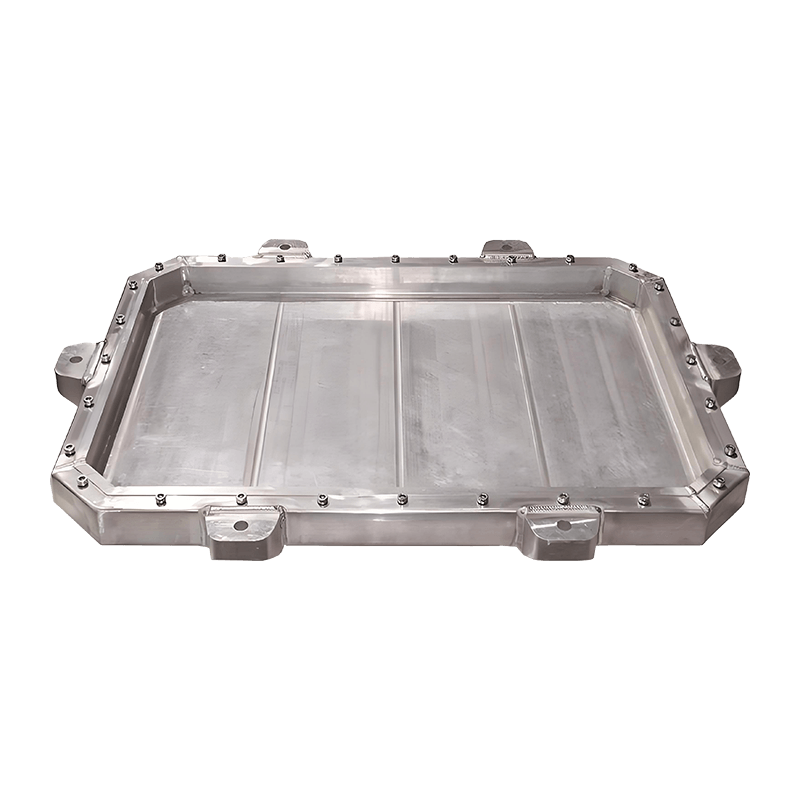 OEM/ODM Die-Cast Battery Tray for New Energy VehiclesAluminum alloy battery tray for new energy vehicles, supporting battery module protection and lightweight, integrated die-casting trends in large structural parts.View Product →
Battery trays and similar large parts require careful attention to flatness, sealing faces, fastener locations, and crash load paths. The die design must handle long flow paths and thermal balance across a large footprint. Machining strategy must avoid distortion and maintain interface tolerances. Leak testing and dimensional verification are not optional extras for these programs.
Telecommunications filter housings and heat sink cavities require a combination of thermal performance, dimensional accuracy, and surface quality. Photovoltaic inverter housings, energy storage plates, and inductance boxes support power conversion and storage systems. These parts often need good flatness, clean sealing surfaces, and reliable coating or assembly interfaces.
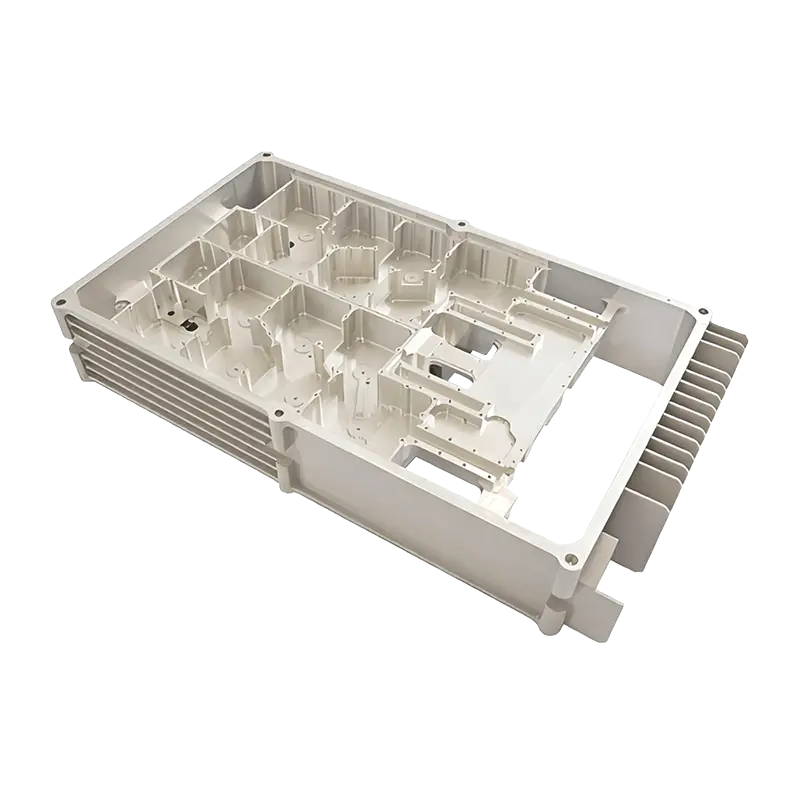 OEM/ODM Die-Cast Telecommunication Filter Housing for 5G EquipmentDie-cast housing for 5G filter assemblies, presented for telecommunications equipment where thermal, dimensional, and surface requirements guide process and inspection planning.View Product →
In energy and telecommunications applications, the casting often carries thermal and environmental responsibility. A small amount of porosity in the wrong location can affect sealing or thermal contact. The supplier should define which surfaces are cosmetic, which are sealing, which are thermal, and which are machining references. That classification drives die layout, process control, and inspection planning.
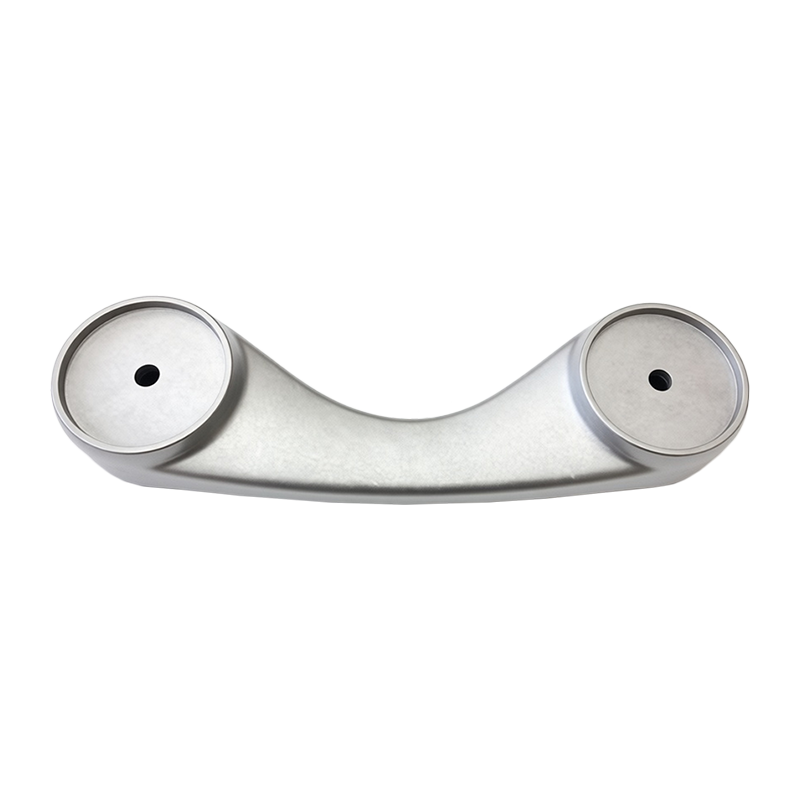
Robot parts, robot dog components, fitness equipment handles, baking trays, coffee machine filter handles, pump housings, and motorcycle parts show how the same die casting platform can serve very different products. The common requirement is repeatable shape and acceptable surface quality at a competitive piece price. The differences lie in load, temperature, cosmetic standards, and cleaning or coating compatibility. A supplier with a broad product base can often transfer lessons from one industry to another, but the buyer should confirm that the specific alloy, finishing, and inspection requirements have been validated.
Most cost and quality problems are designed into the part before the die is cut. A design-for-manufacture review should happen early, while changes are still inexpensive. The following guidelines are not a substitute for a supplier review, but they show where to focus.
Close cooperation between the product designer, die designer, casting engineer, and machinist produces better decisions than a sequential review. A change in gate location may solve a porosity issue but create a weld line on a cosmetic surface. A change in machining datum may improve tolerance stack-up but add fixture cost. The integrated review is where die casting manufacturing becomes a practical engineering exercise rather than a price negotiation.
Die casting quotes should be compared on a total cost basis. The casting price is only one line. Tooling amortization, machining, finishing, inspection, packaging, freight, inventory, and engineering support all affect the landed cost. Volume matters because tooling and setup costs are spread across the program. A low-volume program may be better served by a different process or a simpler tool, while a high-volume program can justify more sophisticated die design and automation.
| Cost driver | What it includes | Question to ask |
|---|---|---|
| Tooling | Die design, steel, machining, heat treatment, trials, spares | How many shots is the die designed for, and what is the maintenance plan? |
| Material | Alloy ingot, melt loss, chemistry control, scrap credit | How is chemistry verified, and how is runner scrap reused? |
| Machine and process | Tonnage, cycle time, energy, labor, yield | What is the expected cycle time, and how is it validated? |
| Finishing | Trimming, deburring, machining, coating, impregnation | Which operations are in-house, and how are fixtures controlled? |
| Quality | Inspection, testing, documentation, containment | What is inspected on every lot, and what is sampled? |
| Logistics | Packaging, freight, duties, inventory, lead time | What is the delivered cost at the required replenishment frequency? |
A supplier that cannot explain its yield, scrap rate, and rework assumptions is likely to recover those costs elsewhere. It is better to agree on the assumptions before production than to discover them through price increases or quality holds. The same applies to tooling ownership, spare inserts, maintenance responsibility, and end-of-life arrangements.
Supplier selection should combine a commercial review with a technical audit. Start with the drawing, annual volume, quality targets, and delivery model. Then verify the supplier’s ability to control the specific part, not just its general capability.
Ningbo Dinghong Mould is located in Ningbo’s Beilun high-end mould park, close to Ningbo Port, and operates an integrated model covering mold design, manufacturing, die casting, finishing, and trade. Its product range includes automotive, new energy, motorcycle, pump and valve, fitness, telecommunications, photovoltaic and storage, appliance, and robot parts. The company reports a marketing network covering China, South America, and Southeast Asia, with plans to develop the European Union market. For international buyers, that combination of tooling capability and export logistics is relevant, but it should still be verified against the specific program requirements. A technical review can start with a drawing, annual volume, and quality target; the contact page is the right entry point for that conversation.
Die casting defects are usually process signals, not random events. The countermeasure depends on where the defect originates.
The corrective action should be verified with data. A porosity issue that is “fixed” by slowing the shot may create a cold shut. A flash issue that is “fixed” by increasing lock force may accelerate die wear. The supplier should be able to explain the trade-off and show that the corrected process remains capable over a production run.
Lead time is driven by tooling complexity, sampling cycles, and approval requirements. A simple housing may move from design review to trial in a few weeks. A large structural part with slides, vacuum, and extensive machining may require a longer tool build and more iteration. The project plan should define deliverables at each stage so that delays are visible early.
| Stage | Main activity | Typical deliverable |
|---|---|---|
| Design review | Drawing review, process concept, simulation, cost confirmation | Design-for-manufacture report and tooling plan |
| Tool build | Die design, steel machining, heat treatment, assembly | Die ready for trial and dimensional check |
| Trial and sampling | First shots, process tuning, casting inspection | Trial report, sample parts, preliminary dimensions |
| Machining and testing | Fixture prove-out, machining, leak or pressure test | Finished samples and test results |
| Production approval | Capability study, control plan, documentation review | Approved production process and records |
| Ramp-up | Rate validation, packaging, containment, continuous improvement | Stable delivery and monitored quality performance |
Project management should include die maintenance planning before the first production order. A die that is not polished, cooled, and inspected on a schedule will lose dimensional capability and surface quality. Spare inserts, ejector pins, and wear parts should be identified. The buyer should also know how the supplier handles engineering changes after approval, since a small drawing revision can require die modification, new fixtures, and updated validation.
Die casting manufacturing is material-intensive, but aluminum castings are highly recyclable. Runner, overflow, and rejected parts can be remelted with proper chemistry control. The environmental case for aluminum die casting is strongest when the process replaces heavier assemblies, reduces machining waste, and supports efficient electric or thermal systems. Lightweight automotive and energy components can reduce fuel or energy use in service, while thin-wall design reduces material consumption.
Suppliers should manage energy, scrap, and consumables as part of the production system. Die temperature control, efficient cooling, and preventive maintenance reduce wasted shots. Clean segregation of alloys prevents contamination and preserves scrap value. Coating and machining processes should be selected with waste treatment and worker safety in mind. These practices are not only environmental measures; they are cost controls that support stable pricing over the life of a program.
Die casting manufacturing rewards buyers who look at the entire chain. The die determines filling, cooling, ejection, and maintenance. The alloy determines fluidity, strength, and defect sensitivity. The process determines porosity, dimensional stability, and cycle time. Finishing and validation determine whether the casting becomes a reliable component or a source of assembly problems.
The best supplier is not always the one with the lowest casting rate. It is the one that can explain its tooling logic, show process data, control its alloy, validate critical features, and respond to defects with evidence rather than opinion. For automotive, energy, telecommunications, robotics, and industrial programs, that discipline is what turns a die casting quotation into a production program that holds tolerance, cost, and delivery over time.
Die casting automotive parts are made by forcing molten metal into a steel mold under high pressure, where it fills t...
READ MORETwo aluminum housings reach the same leak-test bench on the same afternoon. Both meet the drawing, both weigh close to ...
READ MOREA 12-week die casting mold build can look competitive on quote and still become the expensive option if the first trial...
READ MOREA 180 g aluminum housing with 1.8 mm walls and a ±0.10 mm bearing bore is quoted in the same week as a 12 g stainless s...
READ MORE

Sun Yuejun: +86-13806631860
Wang Shiyong: +86-15958891460 / 15058297768
Dove Yao: +86-18625086675


Copyright © Ningbo Dinghong Mould Co., Ltd. Rights Reserved. Custom Precision Die Casting Aluminum Alloy Parts Manufacturers
